
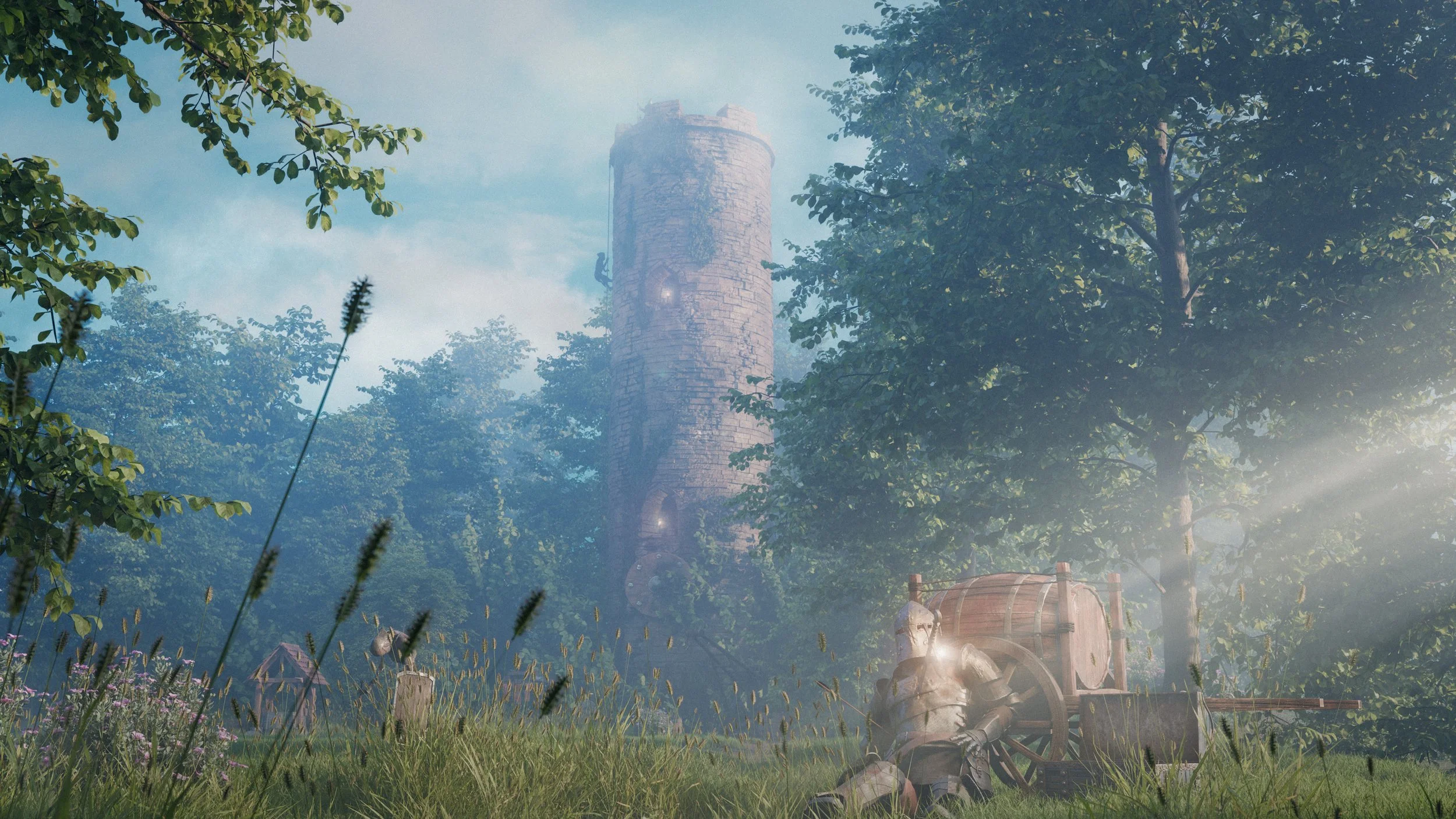
Ironsouls
Atmospheric medieval style environment design created as a video game loading screen.
Overview
A key-art loading screen for an independent studio's dark-fantasy title. A mist-covered forest clearing opens onto an overgrown stone tower above the treeline, while an armoured knight rests against an abandoned cart in the long grass, his journey ending within sight of the place he set out to reach.
Tools: Blender, Substance 3D Painter, Substance 3D Sampler, Photoshop, DaVinci Resolve
Timeframe: 19 days
Output: 5760 × 3240, JPG format.
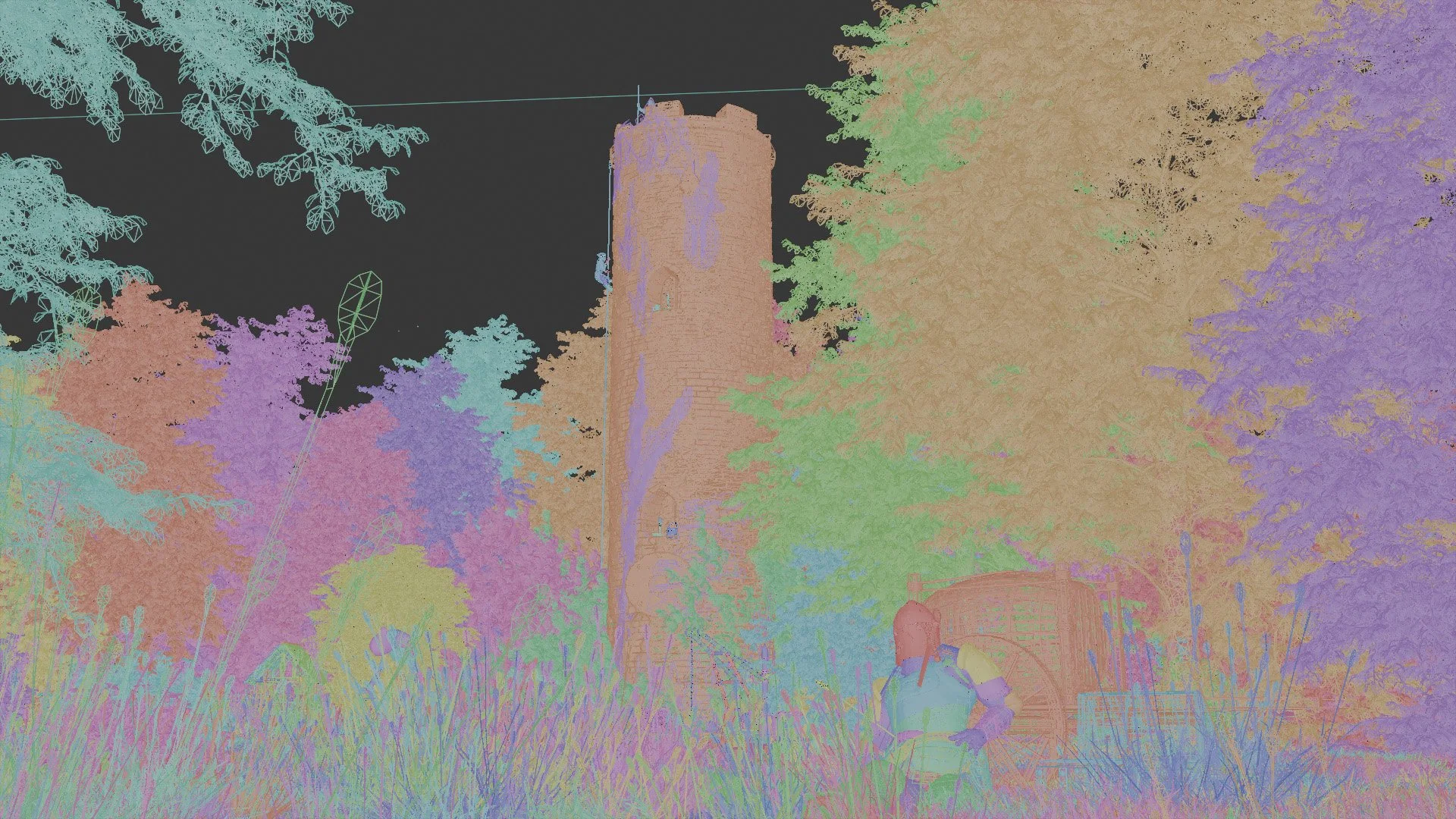
Scene stats: 6M triangles · 10,000 objects · 1.2 GB source textures · 129 unique files.
Scope and Design Direction
The frame is organised as three planes with a fixed reading order: the knight and cart in the foreground, open meadow between, and the tower as the distant landmark. That sequence carries the narrative on its own and reads within the few seconds the screen is displayed. The sky and lower grass are held deliberately quiet, reserving space for the title, lore text and progress bar.
Mood and Visual Style
The studio's direction was melancholy rather than spectacle: a world where the iron outlasts the men who wear it. The knight dies alone, arrows still lodged in his armour and everything that led him here left untold. A low, setting sun fades on the day as it fades on him, while the clearing stays calm and indifferent to his end. The finished image was to feel less like a render than a still from an old fantasy film, grained and aged.
Technical Details
Environment Creation
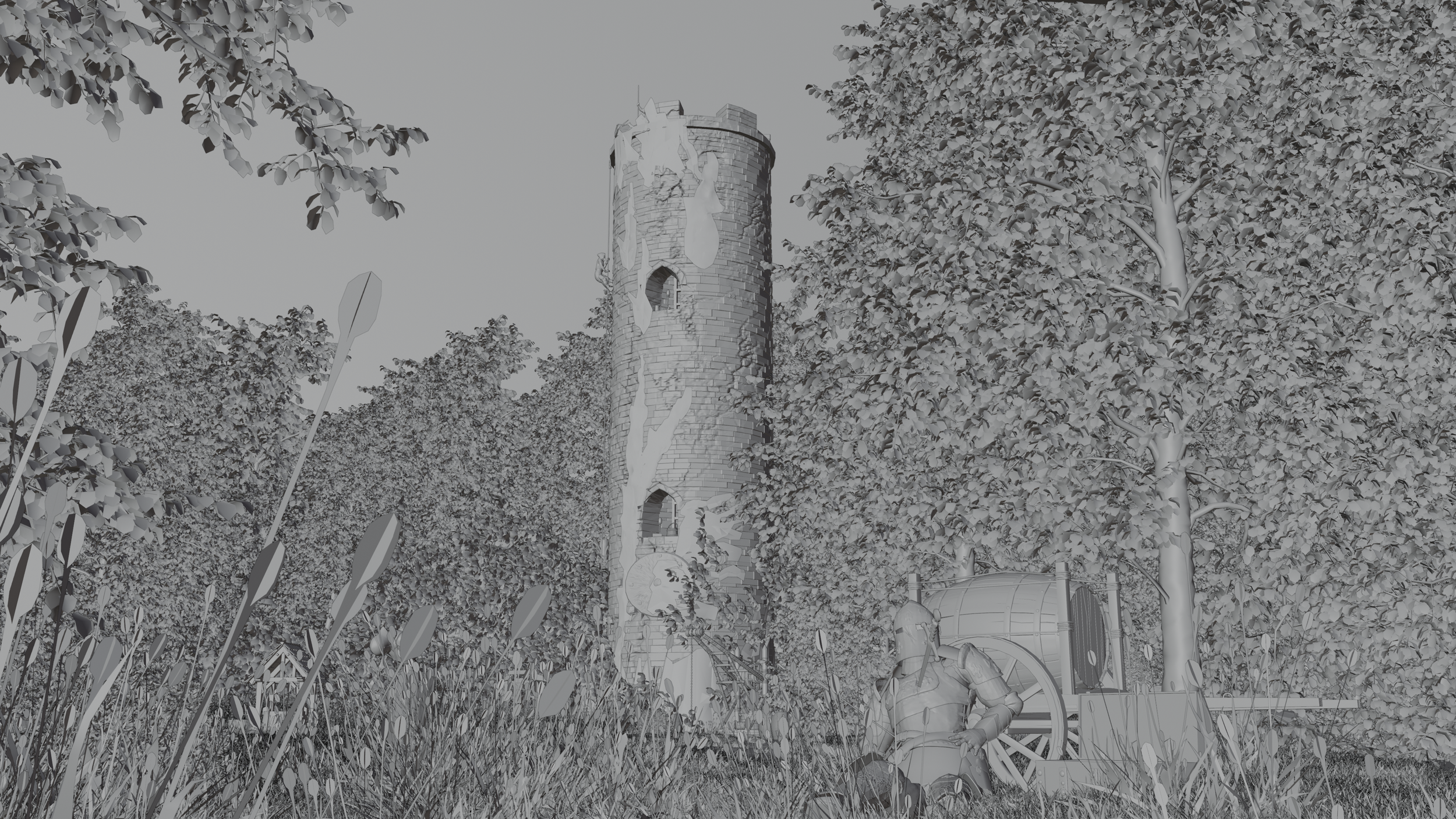
The scene was built to a locked camera, with base lighting and volumetrics established at blockout so every addition was judged against the final mood rather than a neutral viewport. The clearing is a sculpted terrain whose weight-painted density maps drive a geometry nodes scatter of grass, flowers and trees, with randomised scale and rotation, culled to the camera frustum and adjusted by hand around the focal points. The tower was held at blockout until the surrounding environment was resolved, keeping its silhouette open to change while the composition settled. A single low sun through volumetric haze produces the light shafts, rendered in Cycles and composited in Photoshop.
Asset Creation
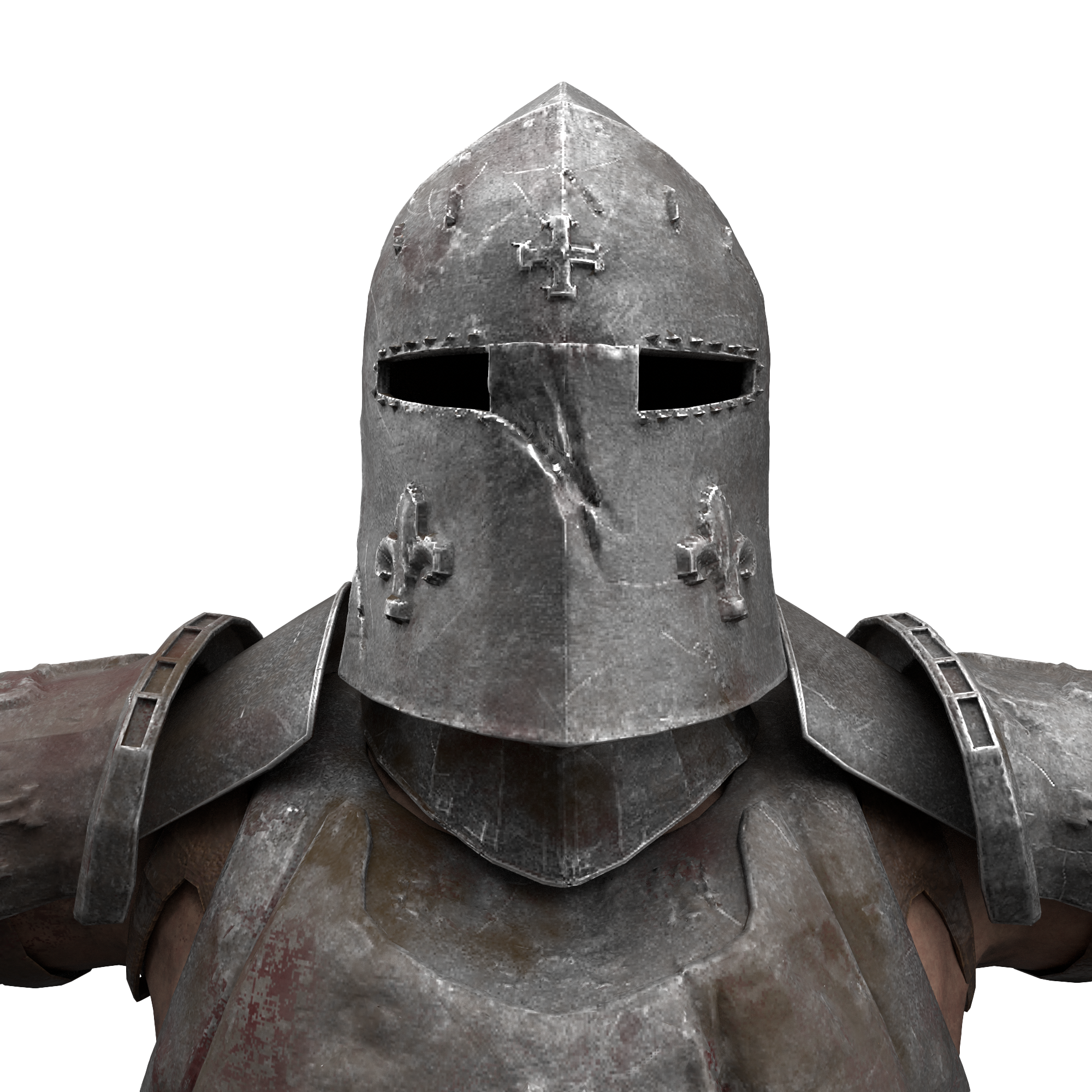
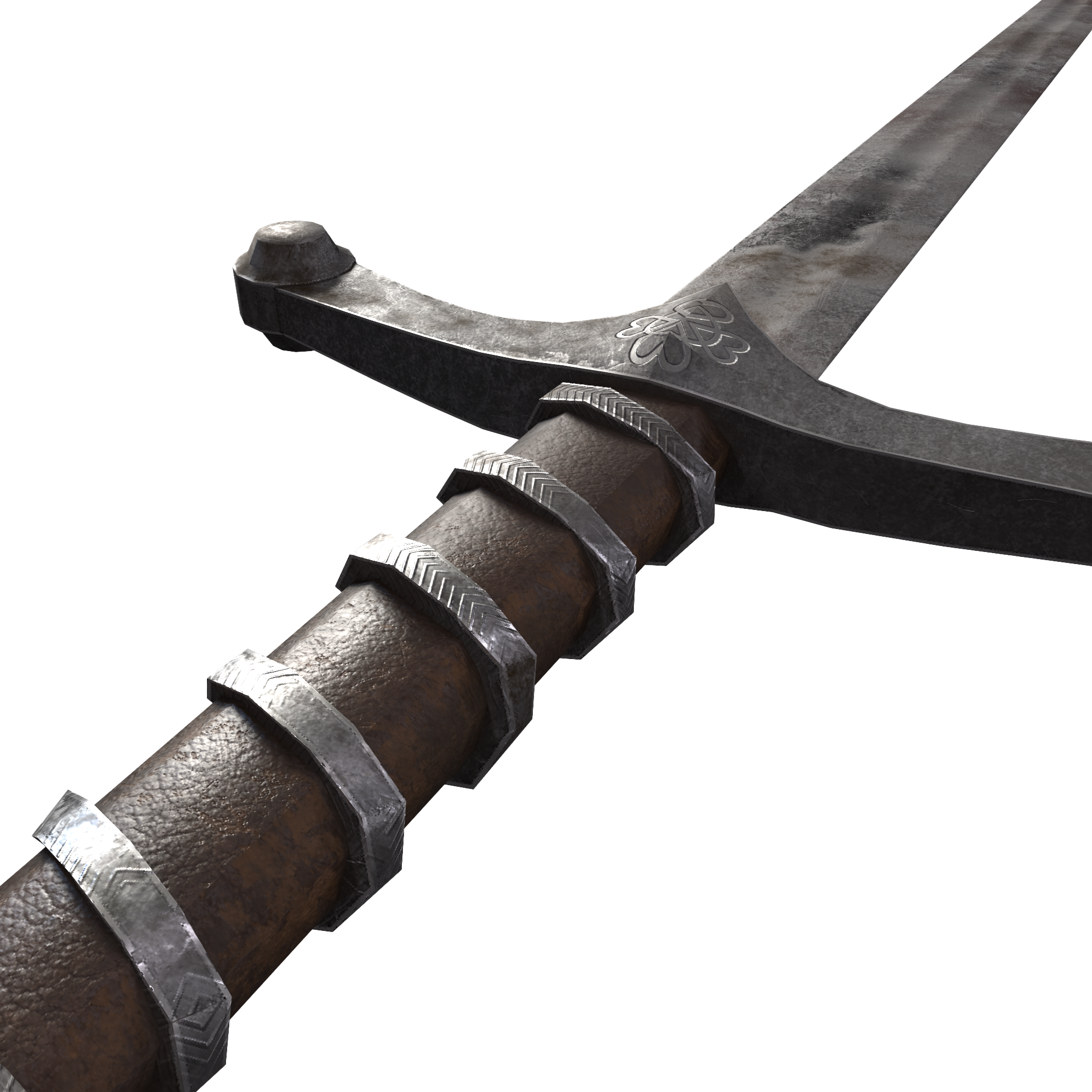
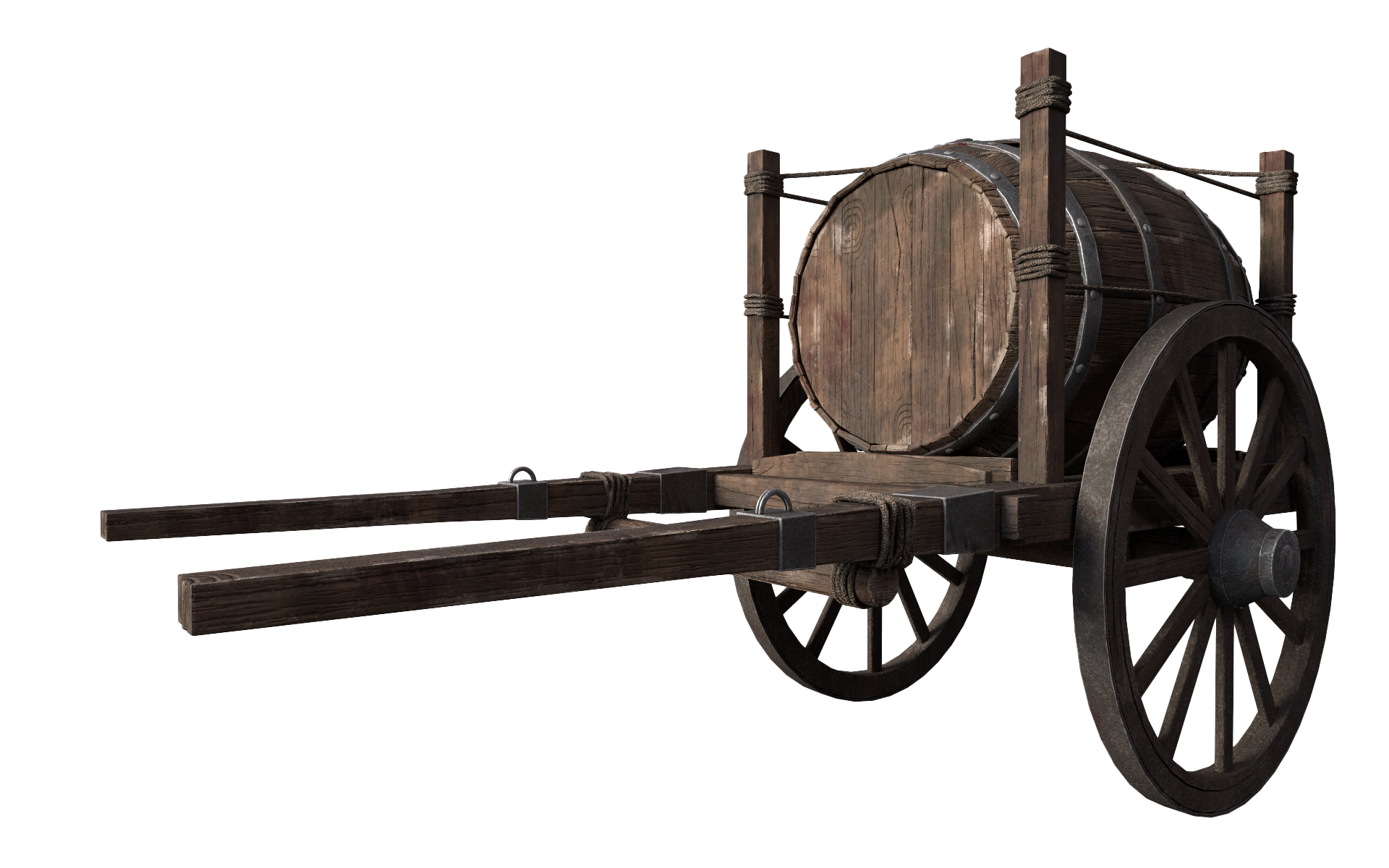
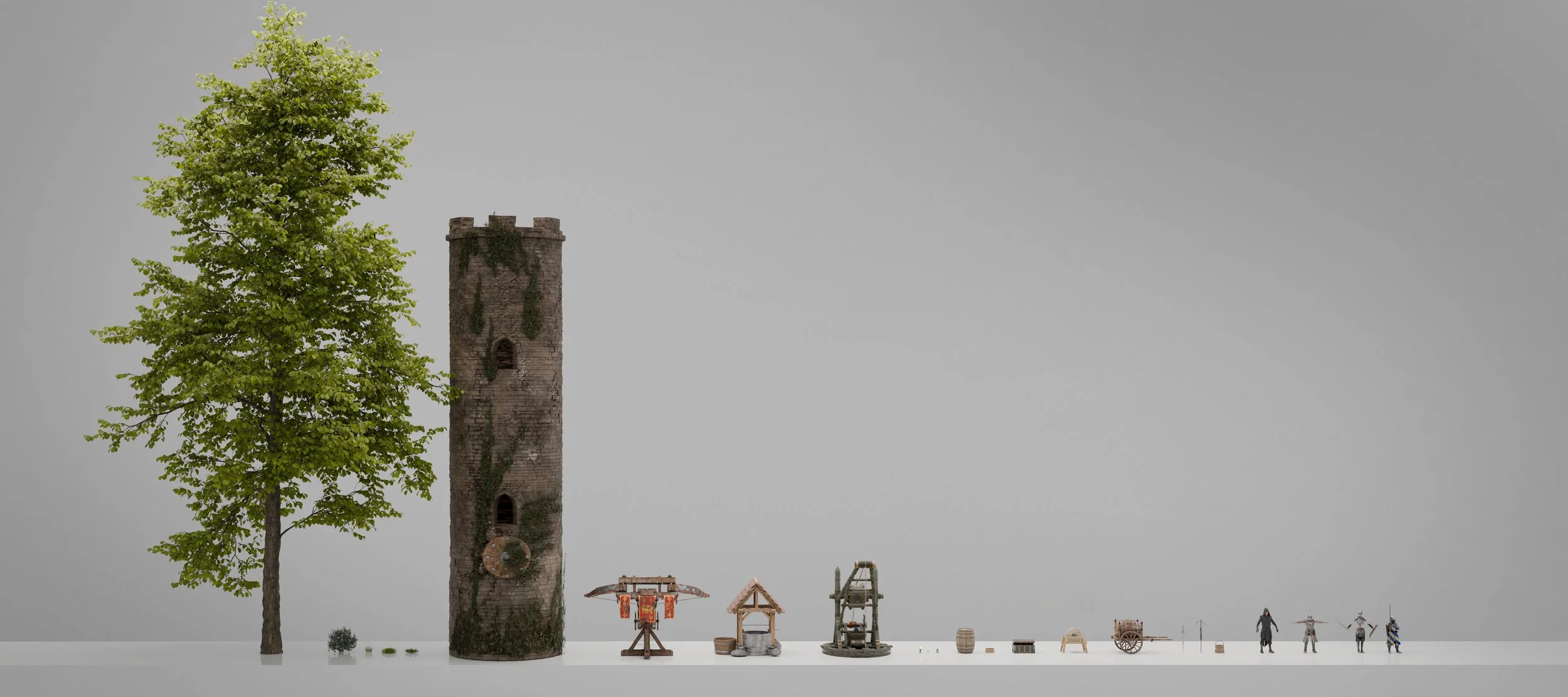
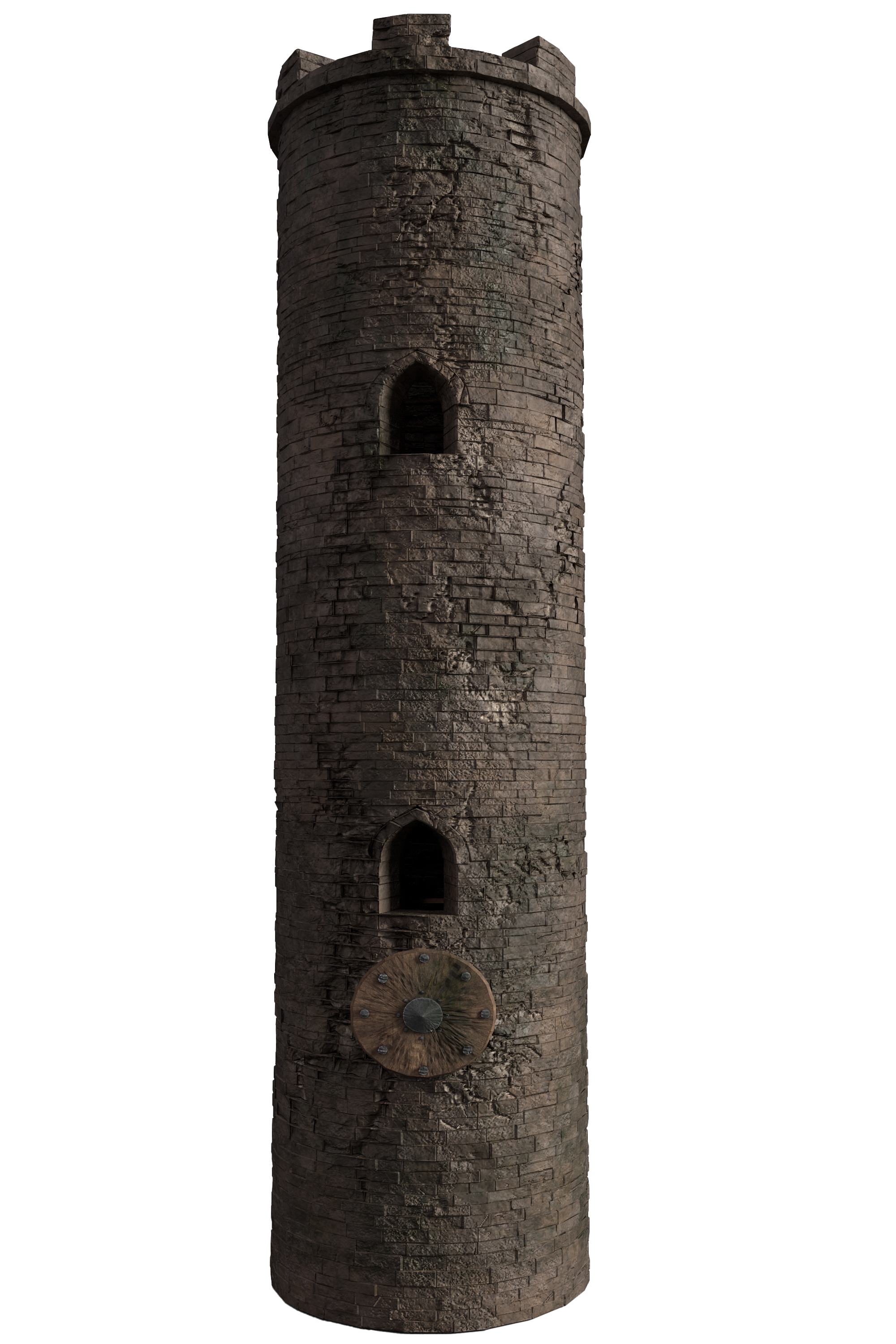
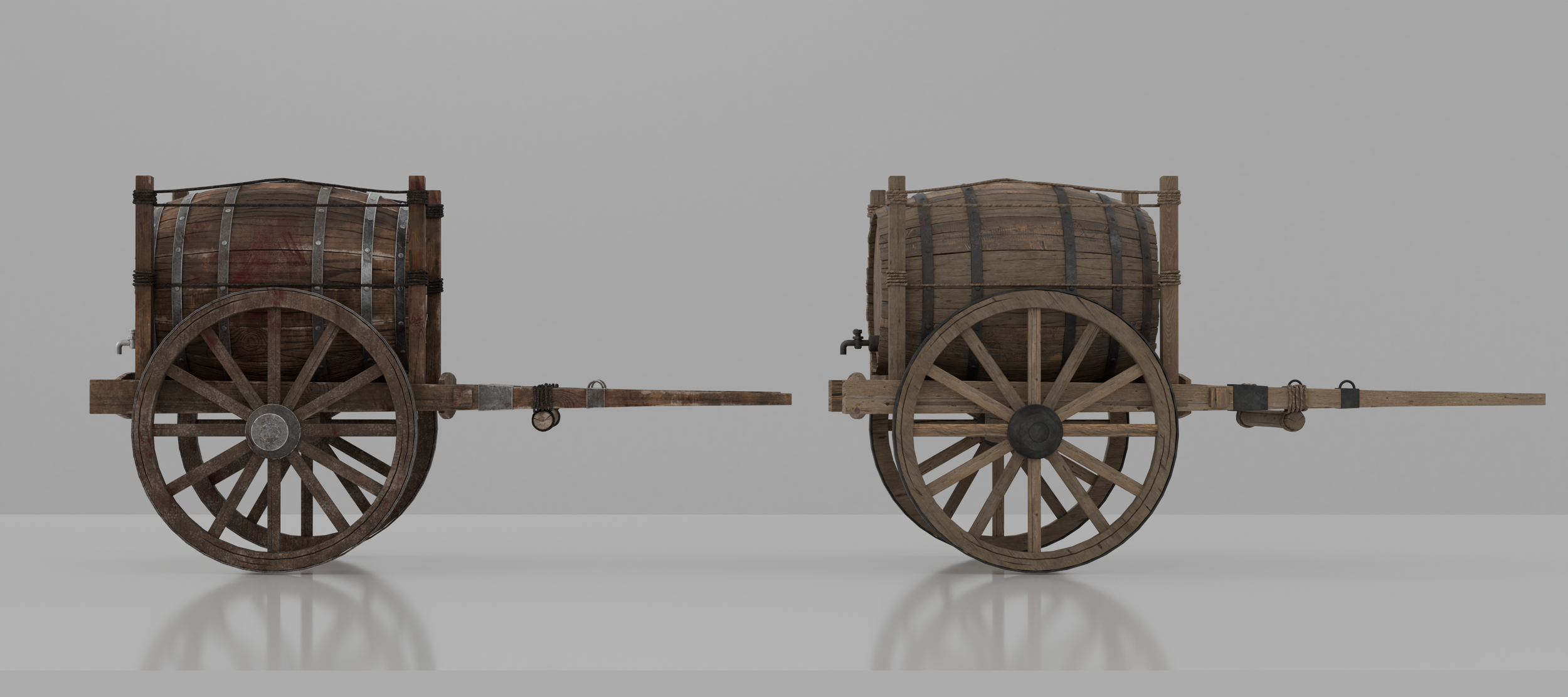
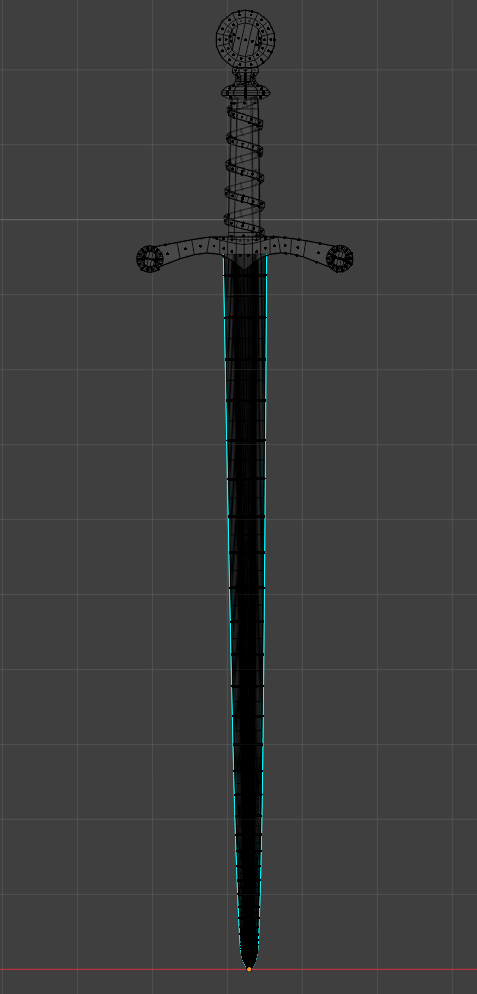
With a camera that never moves, each asset was budgeted by the space it occupies in frame. The knight, cart and sword sit closest to the lens and received full geometric detail and 4K texture sets, while the tower, softened by distance and mist, was built to hold up only at its final size in frame, with 2K textures.
Asset Overview
Texturing Assets
Distant meshes were assigned materials from an existing library of wood, metal and fabric, carried over from previous projects. The knight's materials were authored specifically for this project in Substance 3D Painter, each developed as a layered stack from a single base material. Custom alpha brushes were created in Photoshop for project-specific detail, including the chainmail pattern, which drives a dedicated height mask. The layer stacks are shown below.
Stock assets that sat outside the project's visual style were re-textured in Substance 3D Painter, either rebuilt from scratch or developed from bakes of their original materials, bringing them in line with the custom-made assets.
Modelling Assets
The knight, assassin, sword and tower were modelled from scratch for this project, alongside a set of secondary props. Existing assets were adapted for the vegetation, including a replacement trunk for part of the tree set and the meadow flora. The knight was constructed as a modular armour set over a low-poly human base, which established proportion and scale before each piece was modelled as a separate component.
Rigging Assets
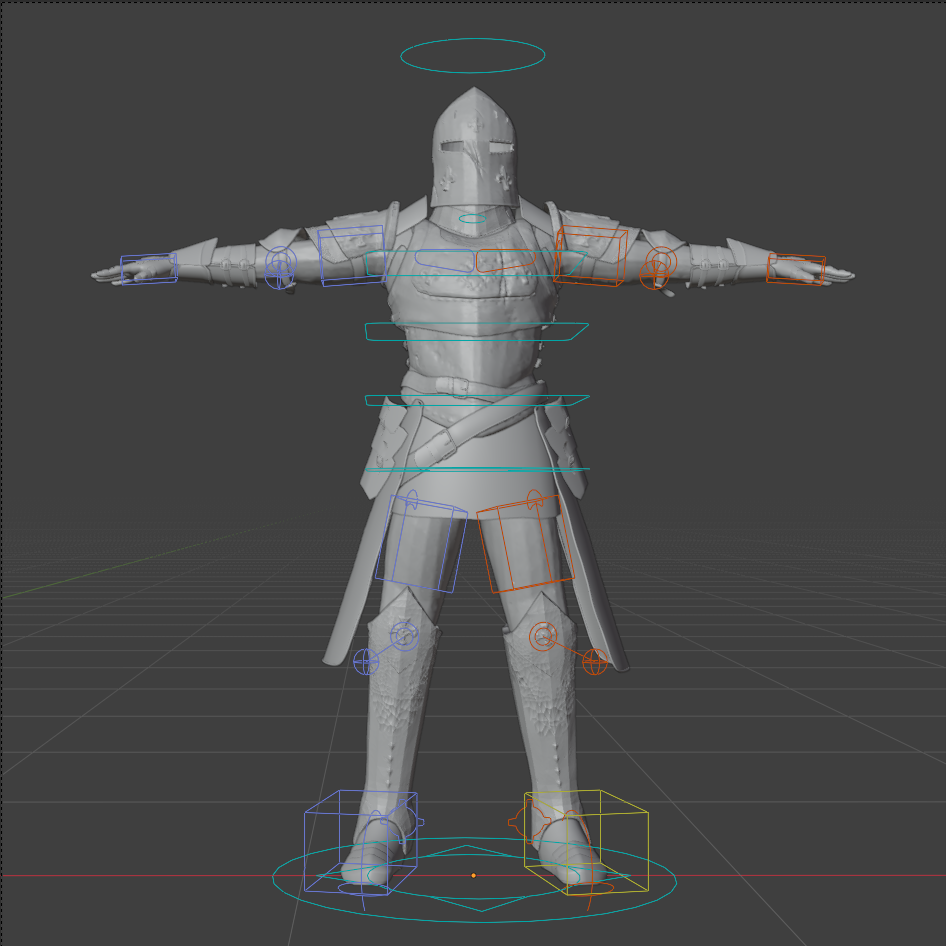
The knight and assassin were rigged with Auto-Rig Pro, which generates the core skeleton and initial skin weights. Its automatic weighting doesn't fully resolve multi-object characters with accessories, so weights were corrected manually on every mesh that makes up each character until both deformed cleanly in their final poses.