
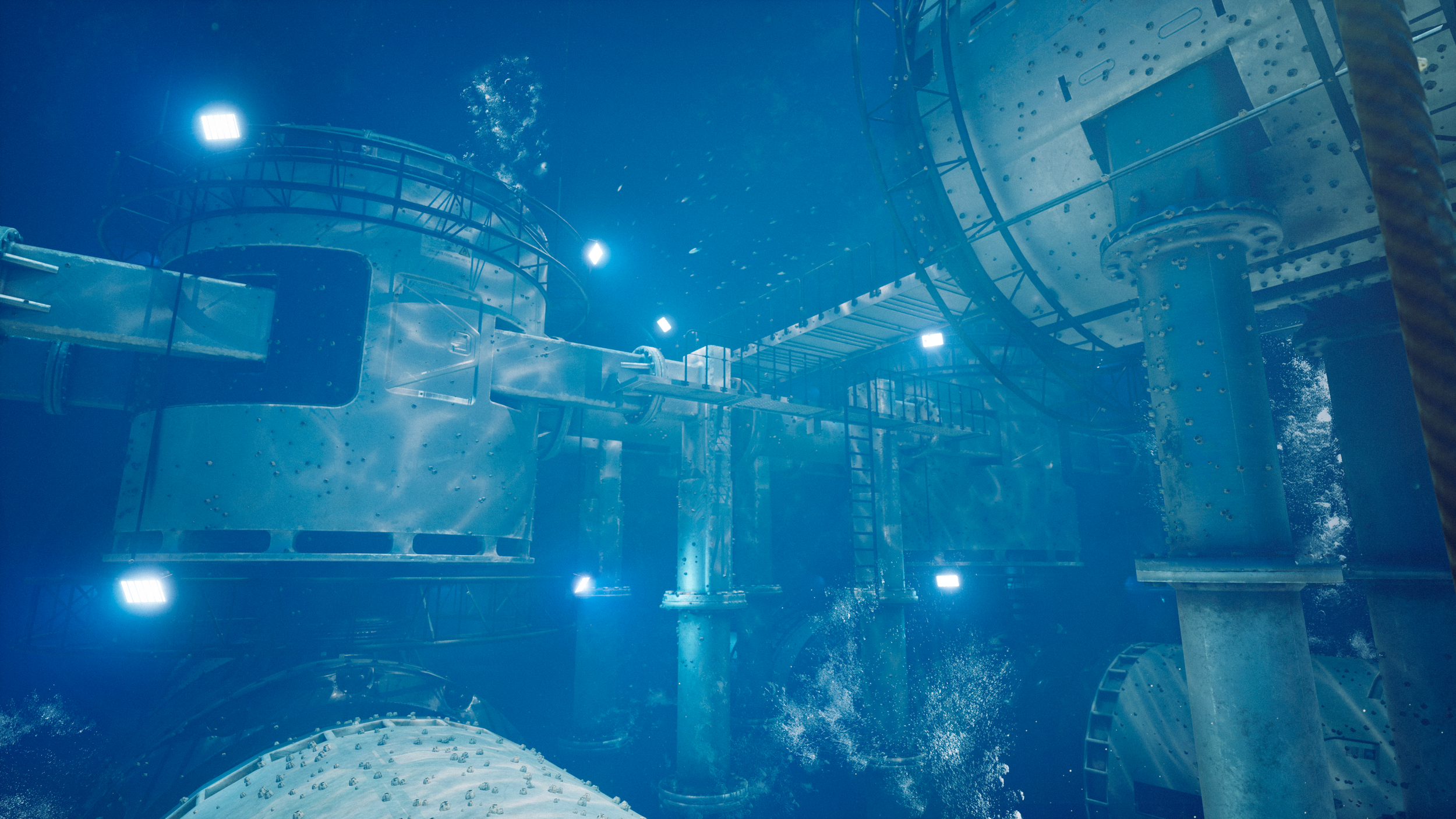
Last Breath
Complete real-time underwater environment, created solo from concept to final polish.
Overview
A real-time underwater environment for an independent studio's sci-fi survival title, serving as the game's central hub: an operational research station on the ocean floor, the last inhabited point before open water, with a traversable exterior and a pressurised interior.
Tools: Blender, Substance 3D Painter, Substance 3D Sampler, Unreal Engine 5.6, Photoshop
Timeframe: 6 weeks
Output: Packaged Unreal Engine 5.6 environment ZIP file, Cover image 3840×2160 PNG
Scope and Design Direction
The station is organised as two contrasting spaces. The exterior is exposed and vertical, its catwalks and ladders kept legible from a distance so the player can always read a route back to the structure, while the interior acts as the counterpoint: enclosed, lit and safe. Structural logic underpins the layout, with load-bearing pillars carrying the pressure vessels and pipework linking them, so the facility reads as engineered infrastructure rather than set dressing.
Mood and Visual Style
The studio's direction was tension through isolation rather than threat: no monsters or wreckage, only the awareness of how far from the surface the station sits. The water was to feel heavy and indifferent, cold in colour and stripped of warmth, with the station as the sole source of light in every direction. Its full extent should never be visible at once, leaving the player to weigh each step away from safety against what little they can see ahead.
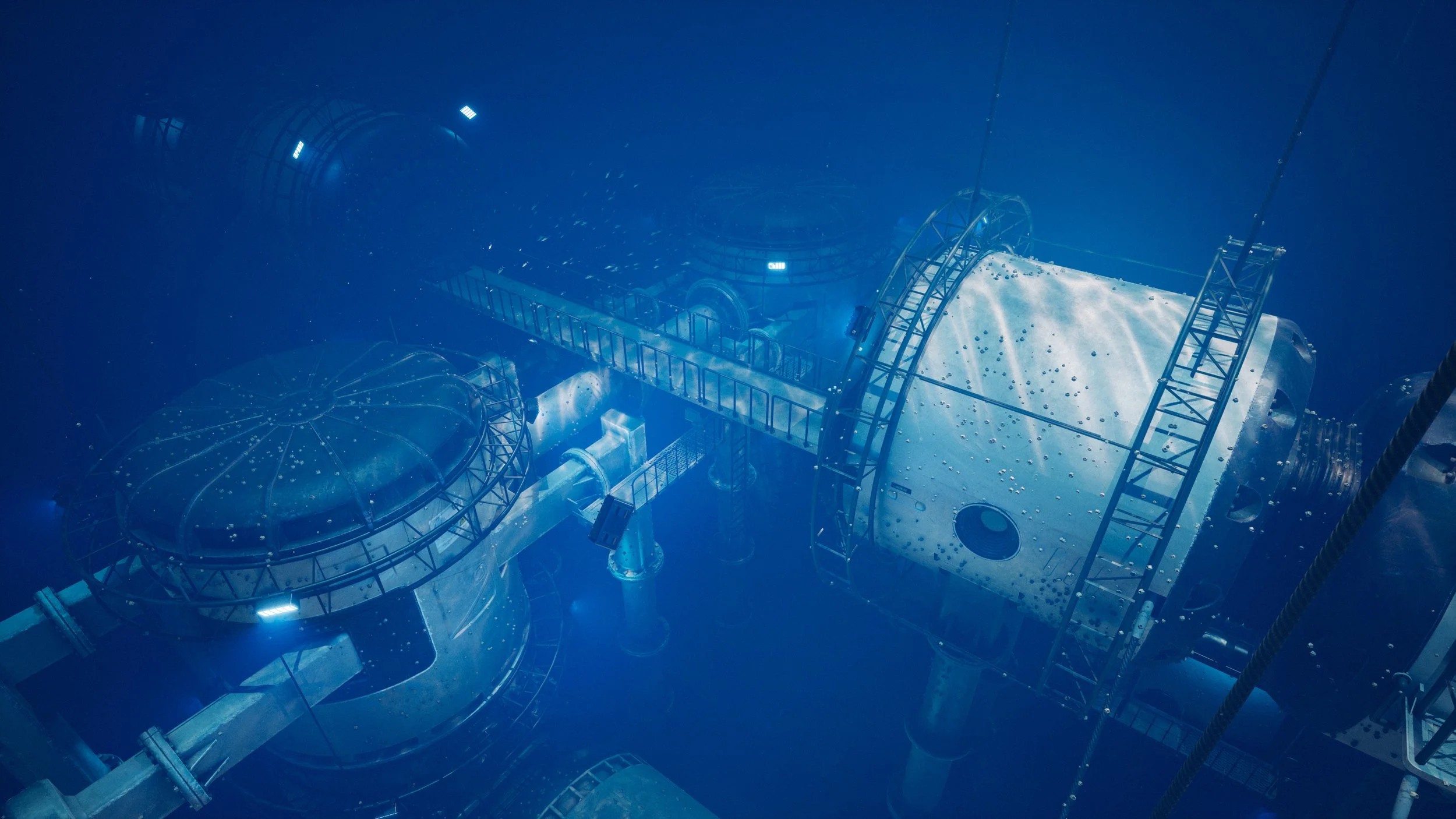
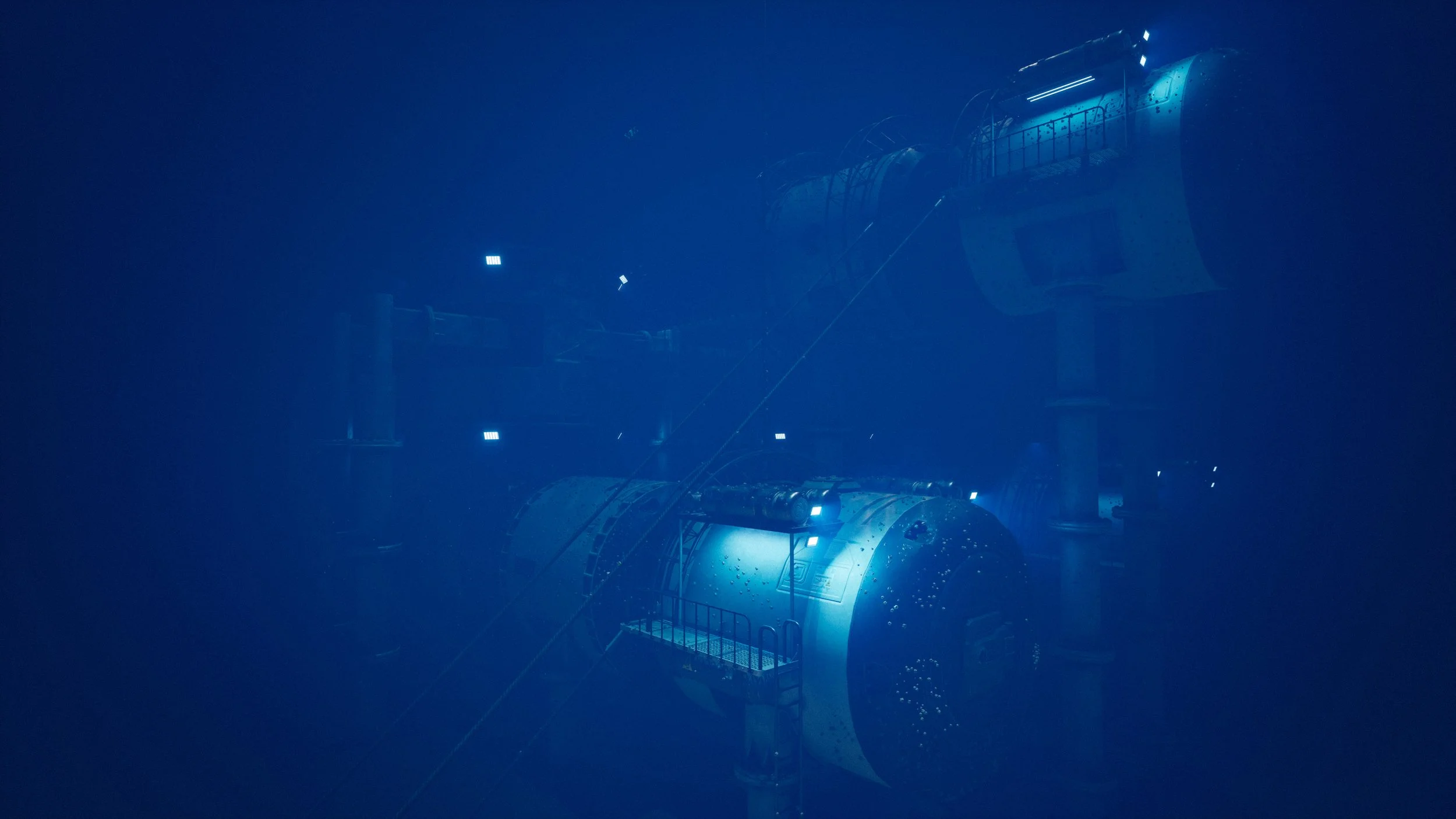
Exterior Environment
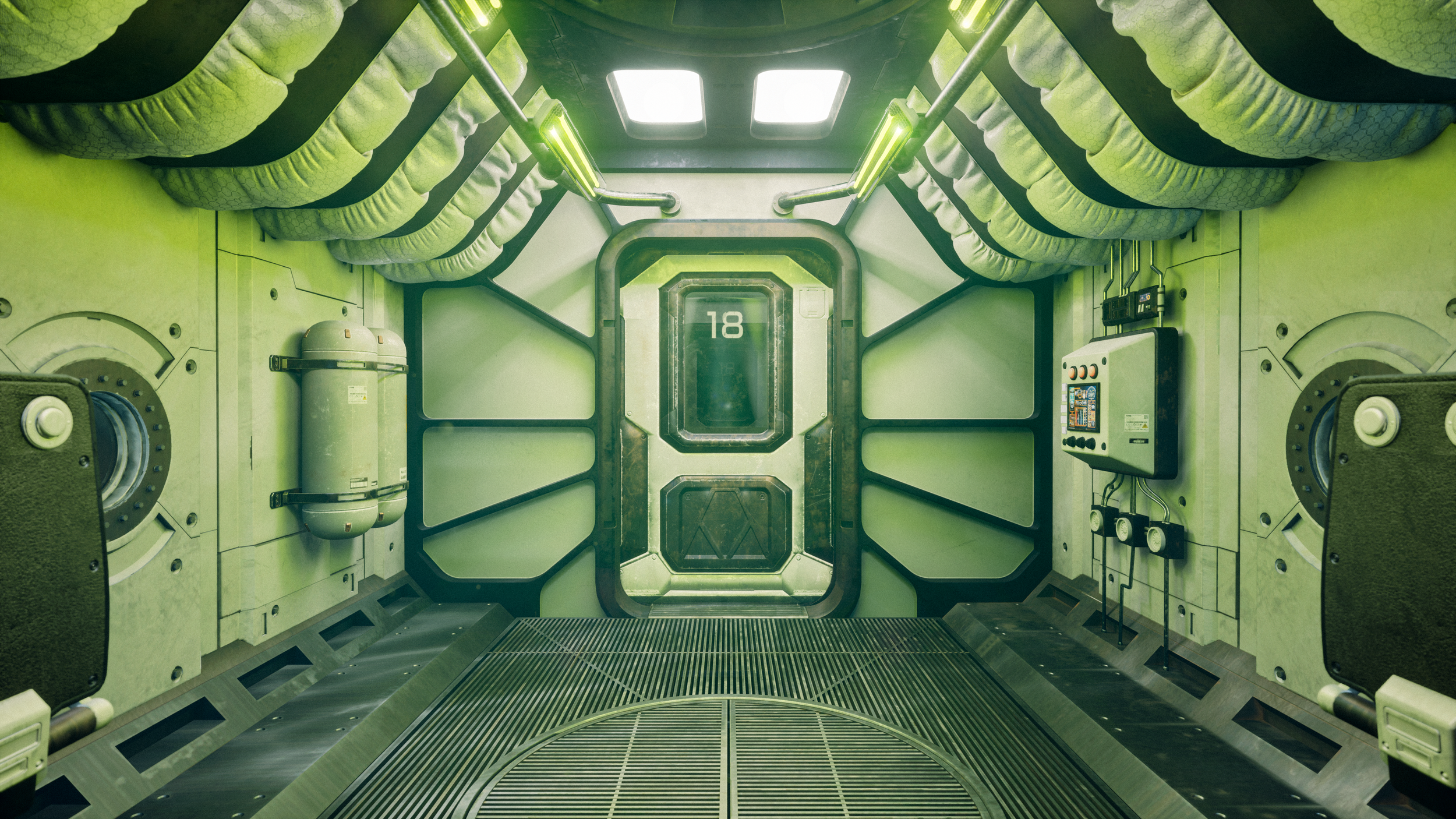
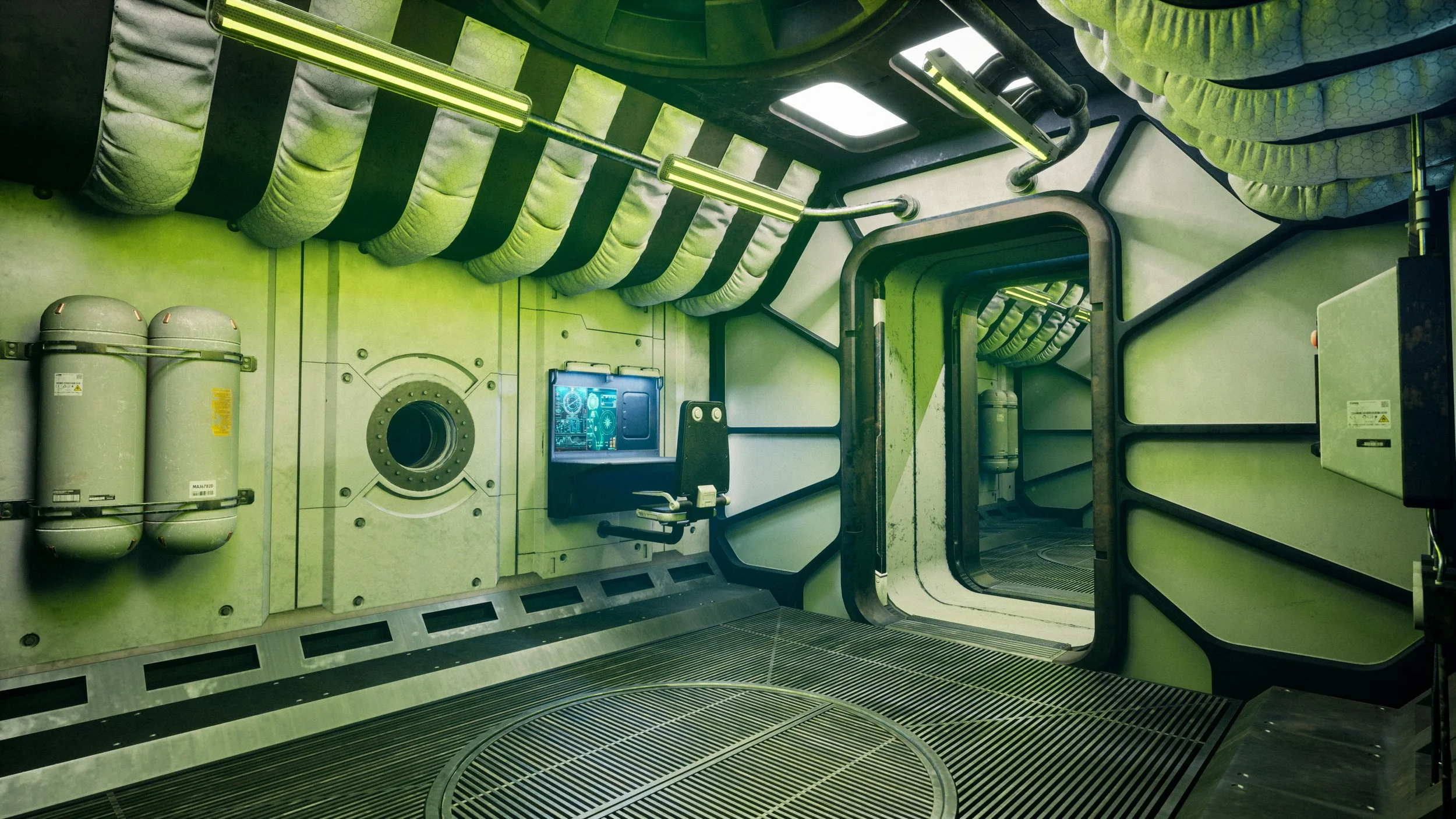
Interior Environment
Technical Details
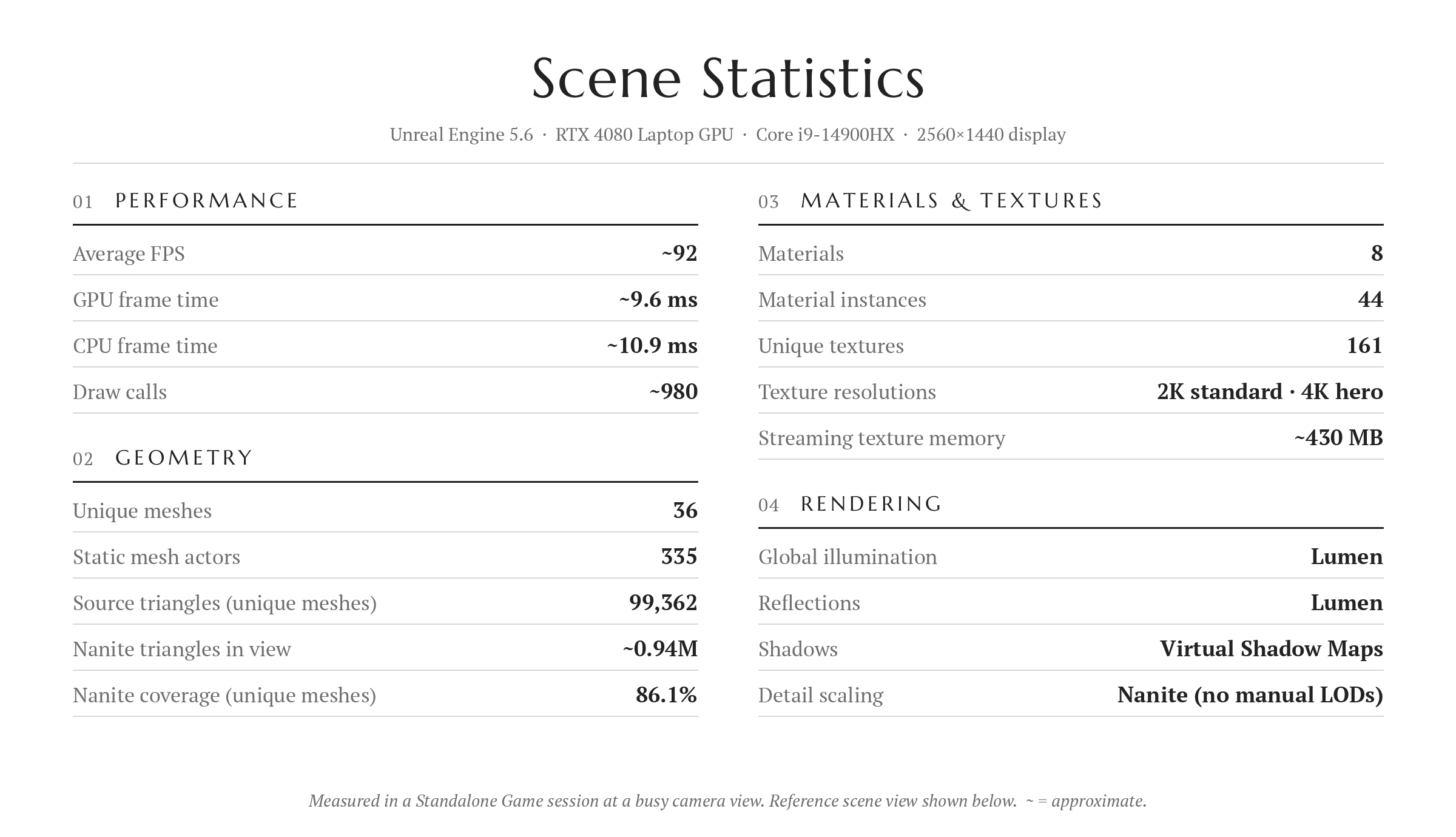
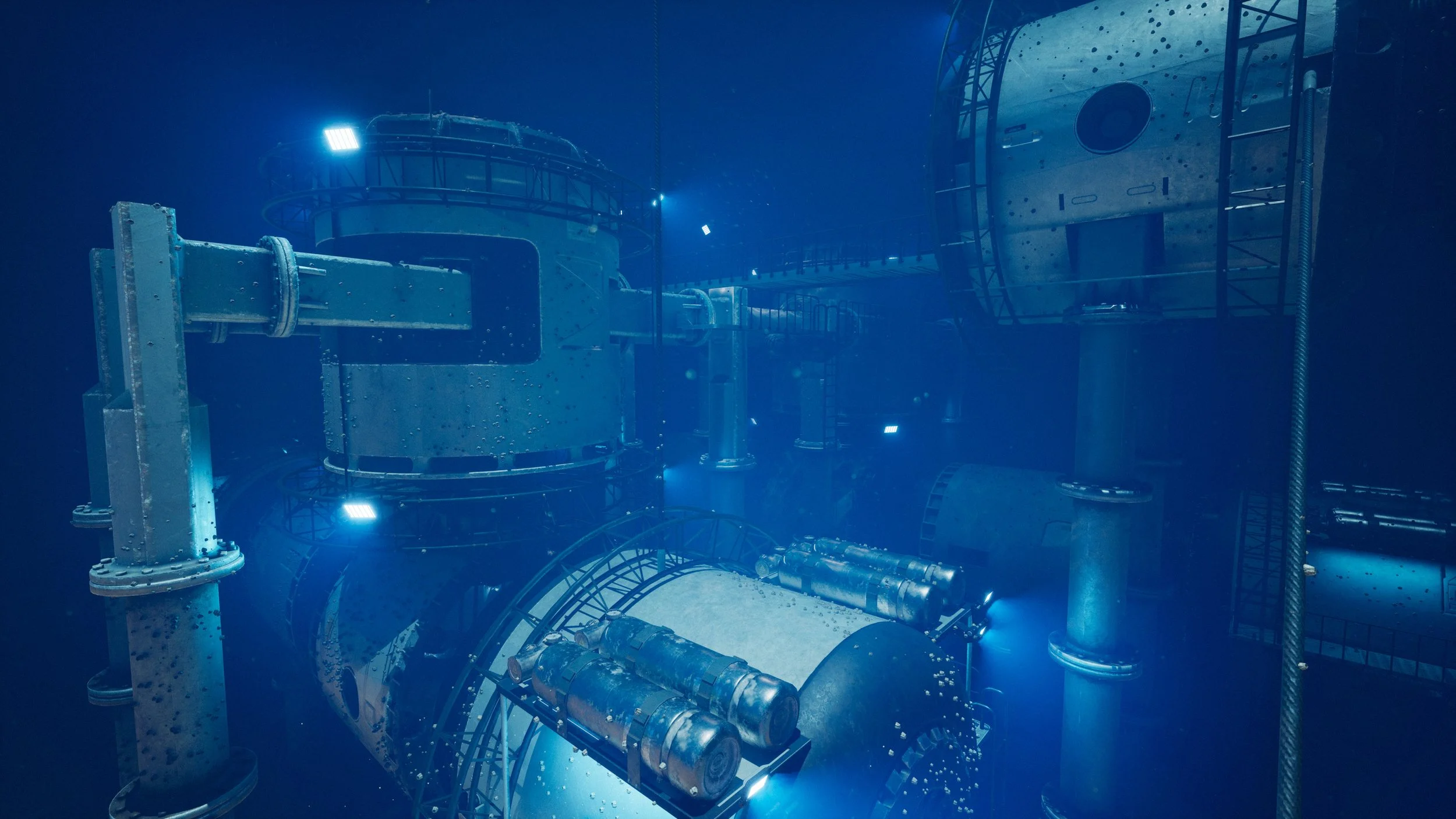
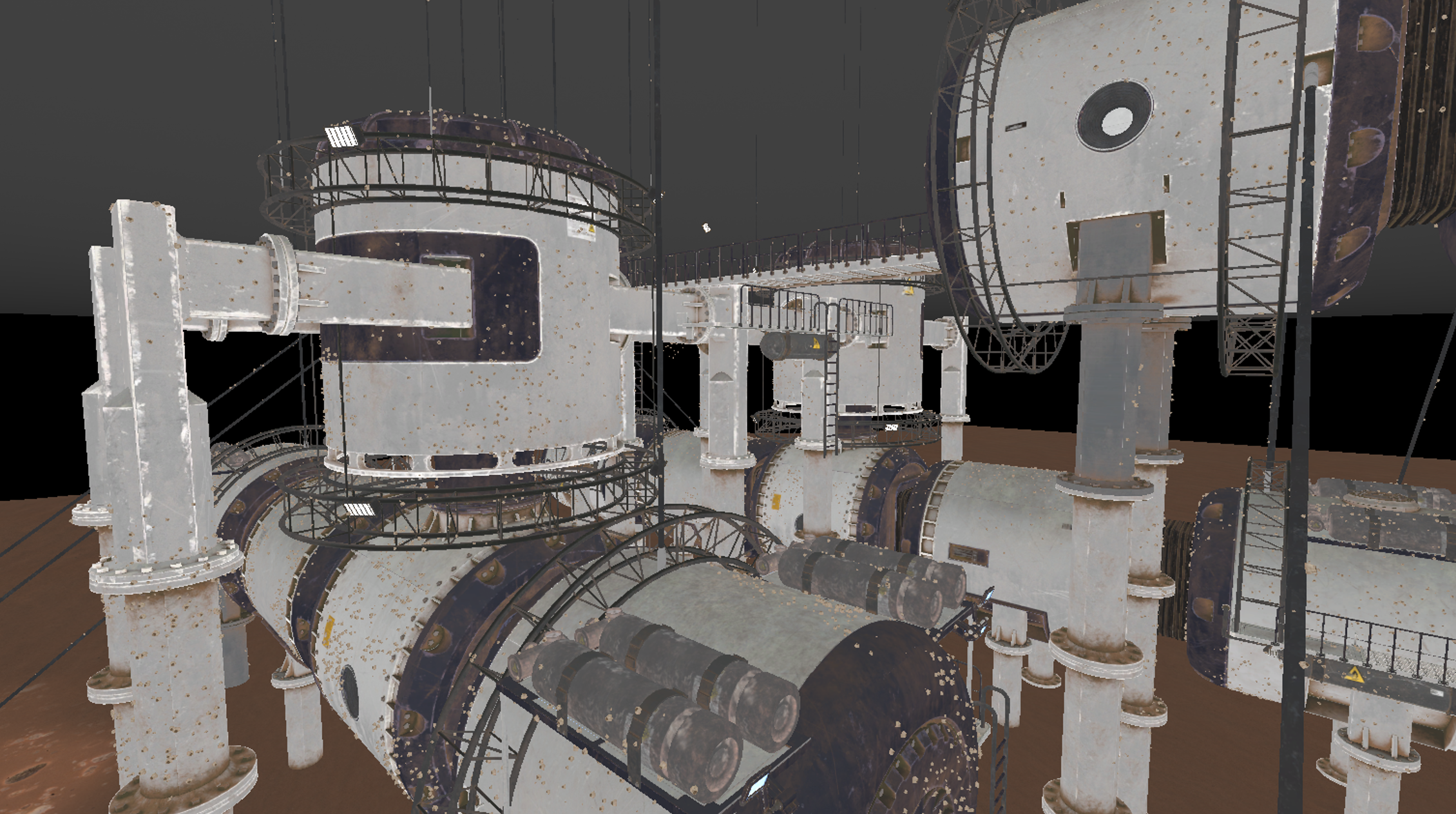
Unlit Scene View
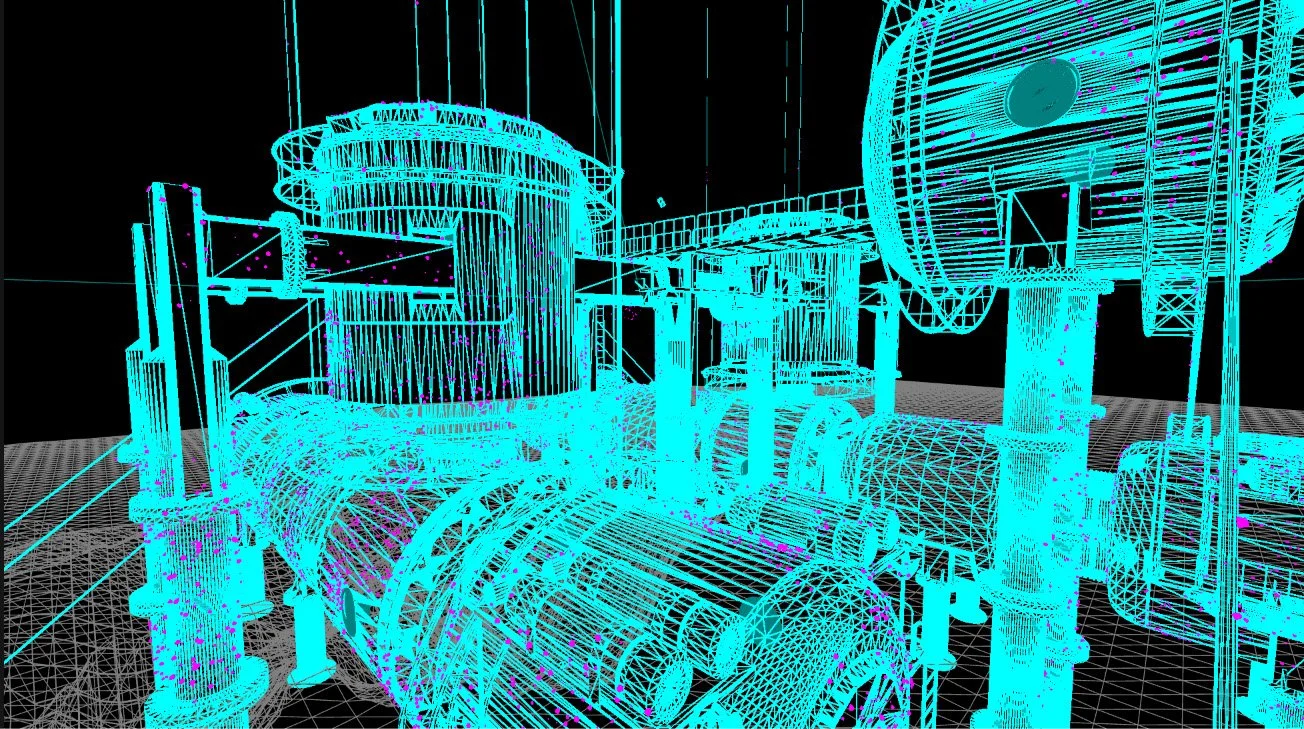
Wireframe Scene View
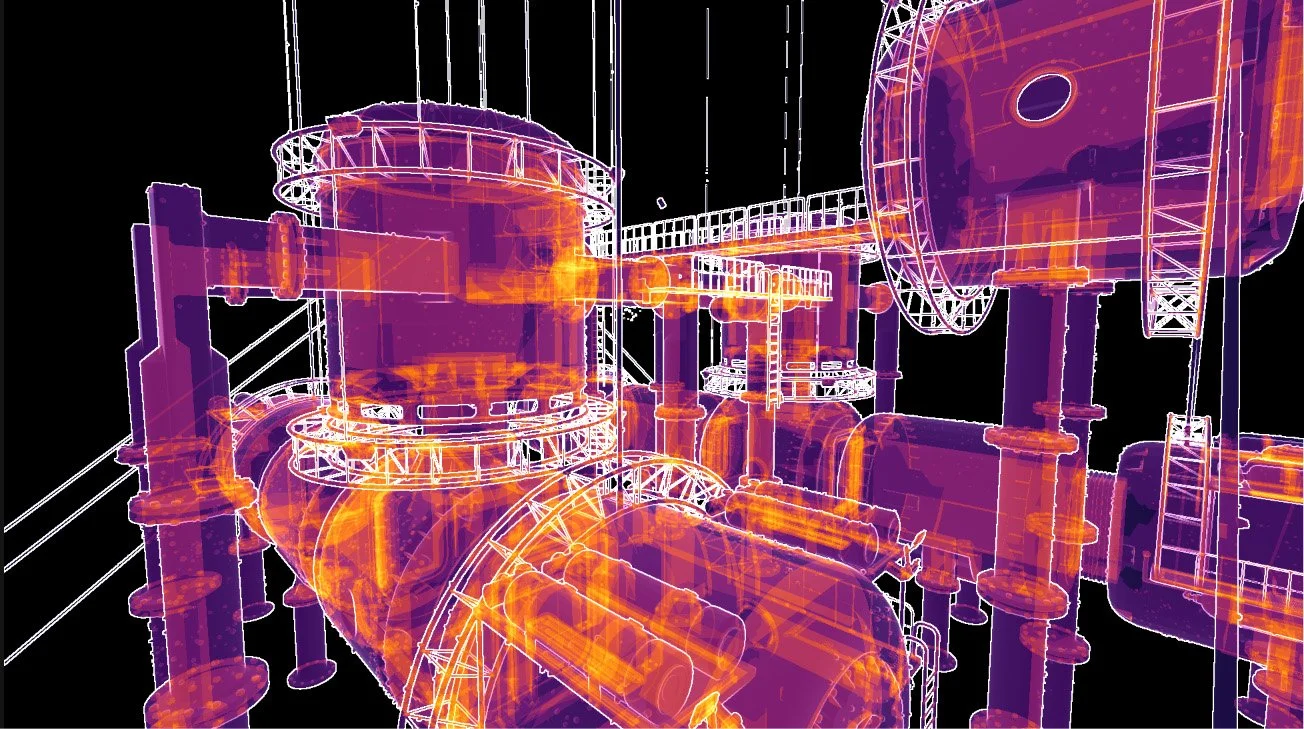
Overdraw Scene View
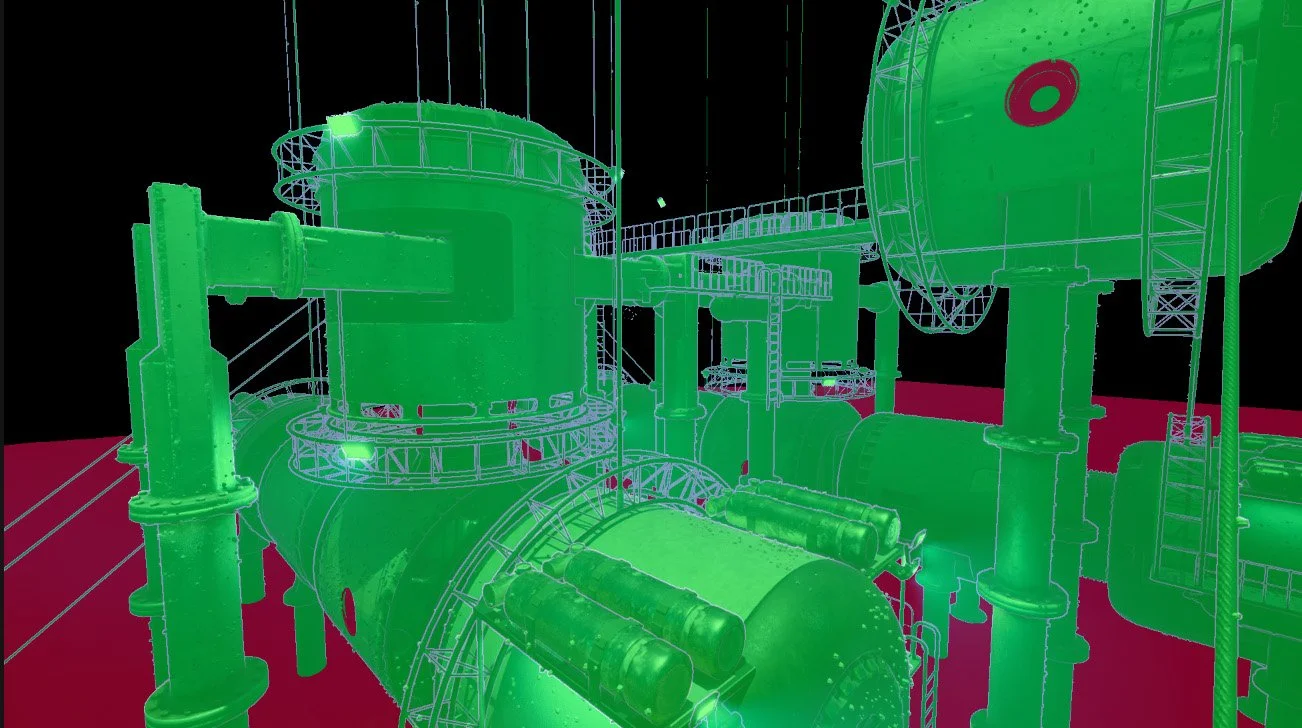
Nanite Scene View
Environment Creation
The underwater volume is built from exponential height fog, lit by a single directional light and shaped by a post-process volume. Lighting is fully dynamic: thirty movable area lights act as the station's floodlights on the exterior while 6 movable area lights illuminate each interior module. The sea floor is a sculpted landscape blending five painted layers: clean sand, silt, gravel, algae and shells. Two niagara systems supply the motion, with suspended particulate throughout the water column and mesh-based fish steered by attraction points, so they travel as a school rather than as independent particles.
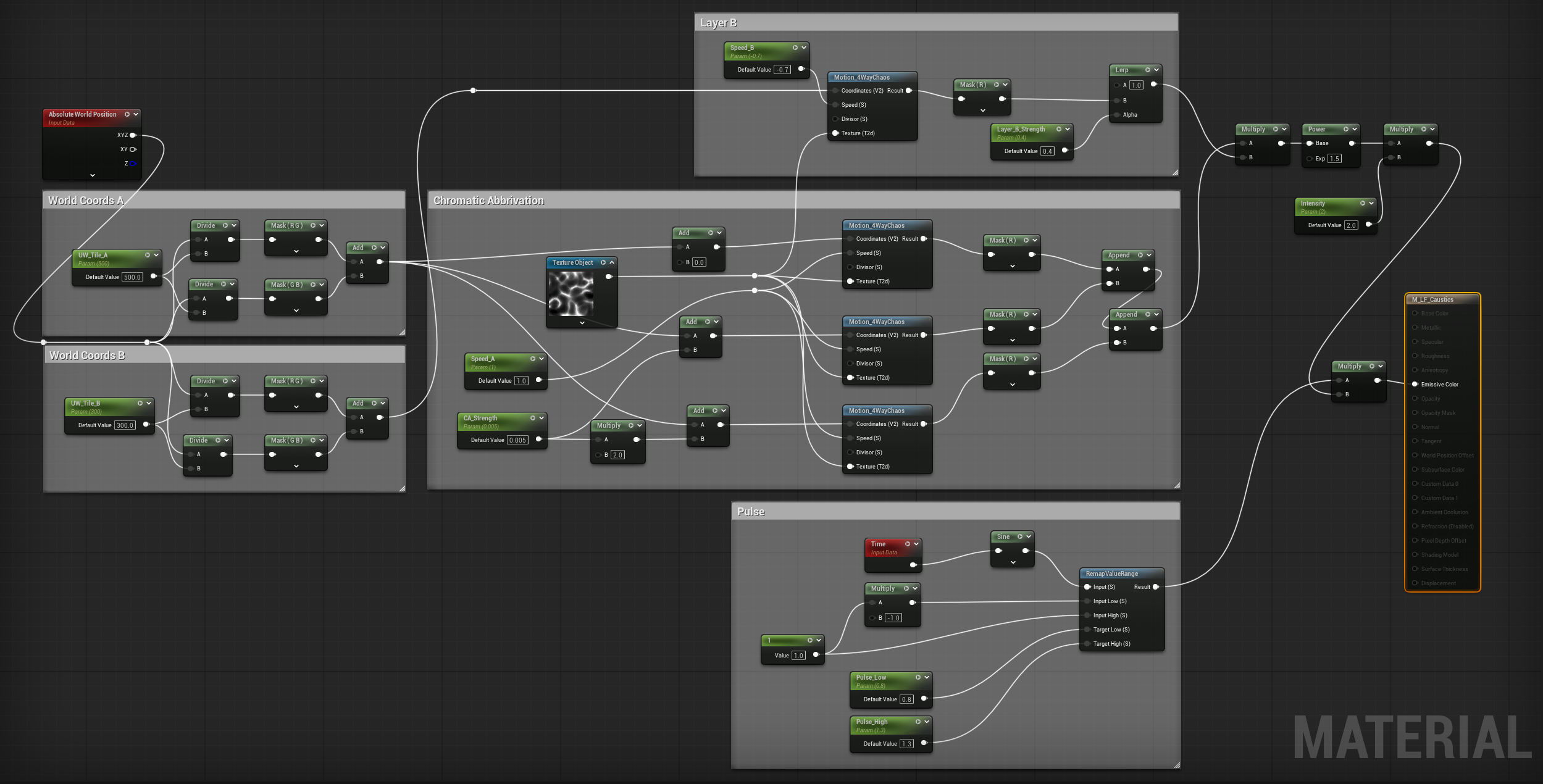
A caustic light function was set up for the wave patterns cast across all meshes utilising world position. The 4WayChaos function continually reshapes the texture to act as real water projection and not a single texture sliding across the sea bed. To stop the pattern looking tiled, a second layer is used with a different speed and tiling size. The wave channels were split into RGB channels with individual offsets to create a chromatic aberration effect. A simple sine wave makes the pattern pulse gently between set intensity values.
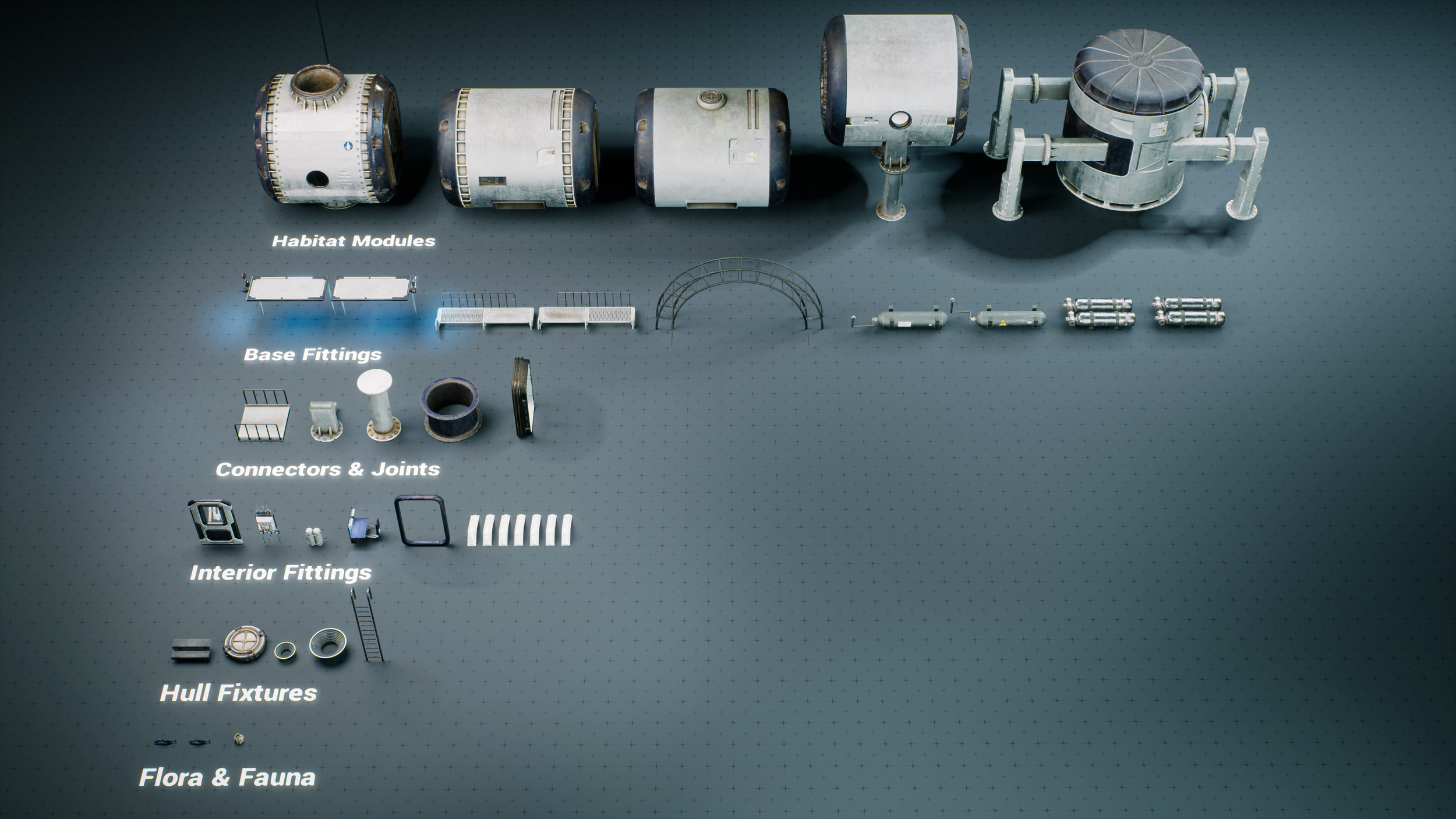
Asset Overview
Asset Creation
Every structural element belongs to a single modular kit built on a 1 m grid, with pivots placed at connection points so vessels, pillars, catwalks and pipe sections snap together without manual alignment. The station is one arrangement of that kit; the same parts reconfigure into further locations without new geometry.
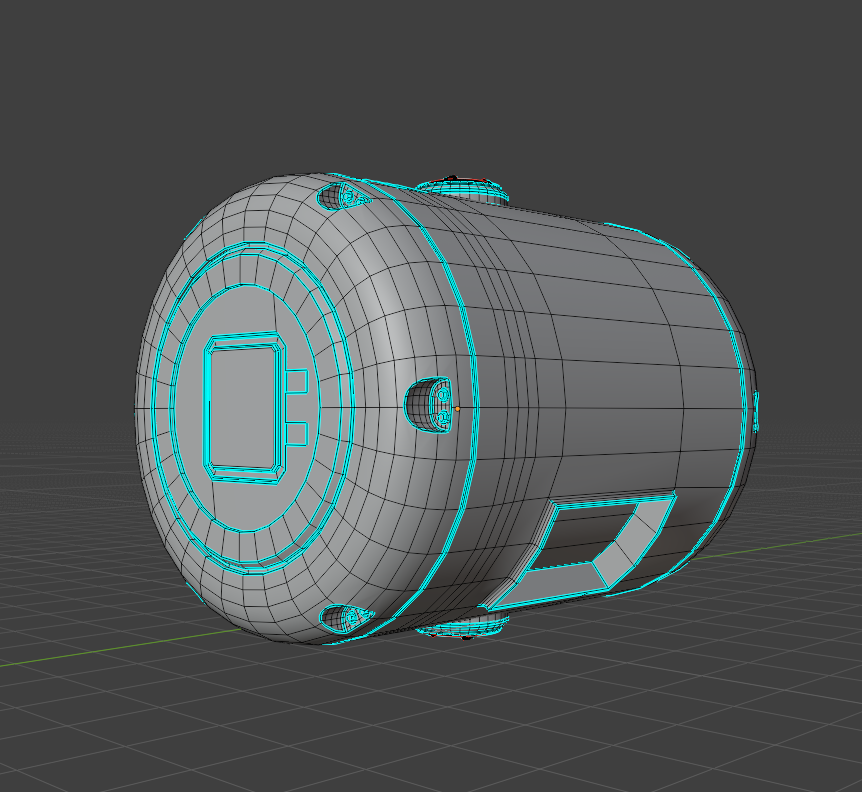
Modelling Assets
Kit pieces were modelled at medium density and built for nanite, so no LOD chain was authored. The geometry holds each asset's overall shape and rounded edges, while smaller surface details such as panel lines and rivets were added as normal map detail in Substance 3D Painter, keeping the meshes light. Only the hero assets were baked from dedicated high-poly models.
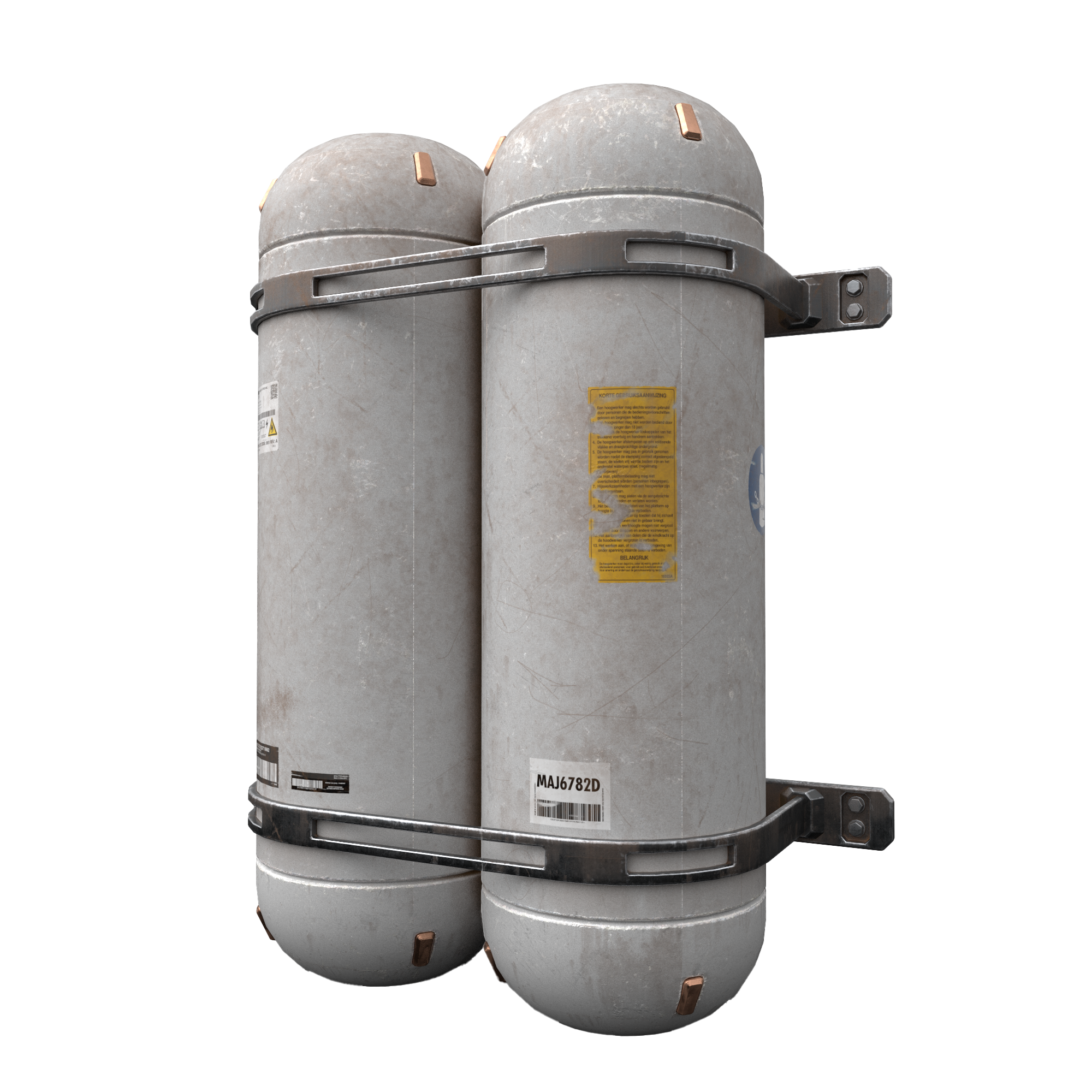
Texturing Assets
The kit holds a consistent texel density of 512 px/m, using 2K texture sets as standard and 4K for hero assets. Painted metal was authored once as a smart material in Substance 3D Painter and reused across the kit for a uniform finish. In Unreal, eight parent materials drive 44 instances, with dirt and algae exposed as parameters, so exterior pieces can be weathered per instance while the interior stays clean. Screen displays were generated in Substance 3D Sampler from Midjourney source images, with warning labels applied as decals.