
Omoide
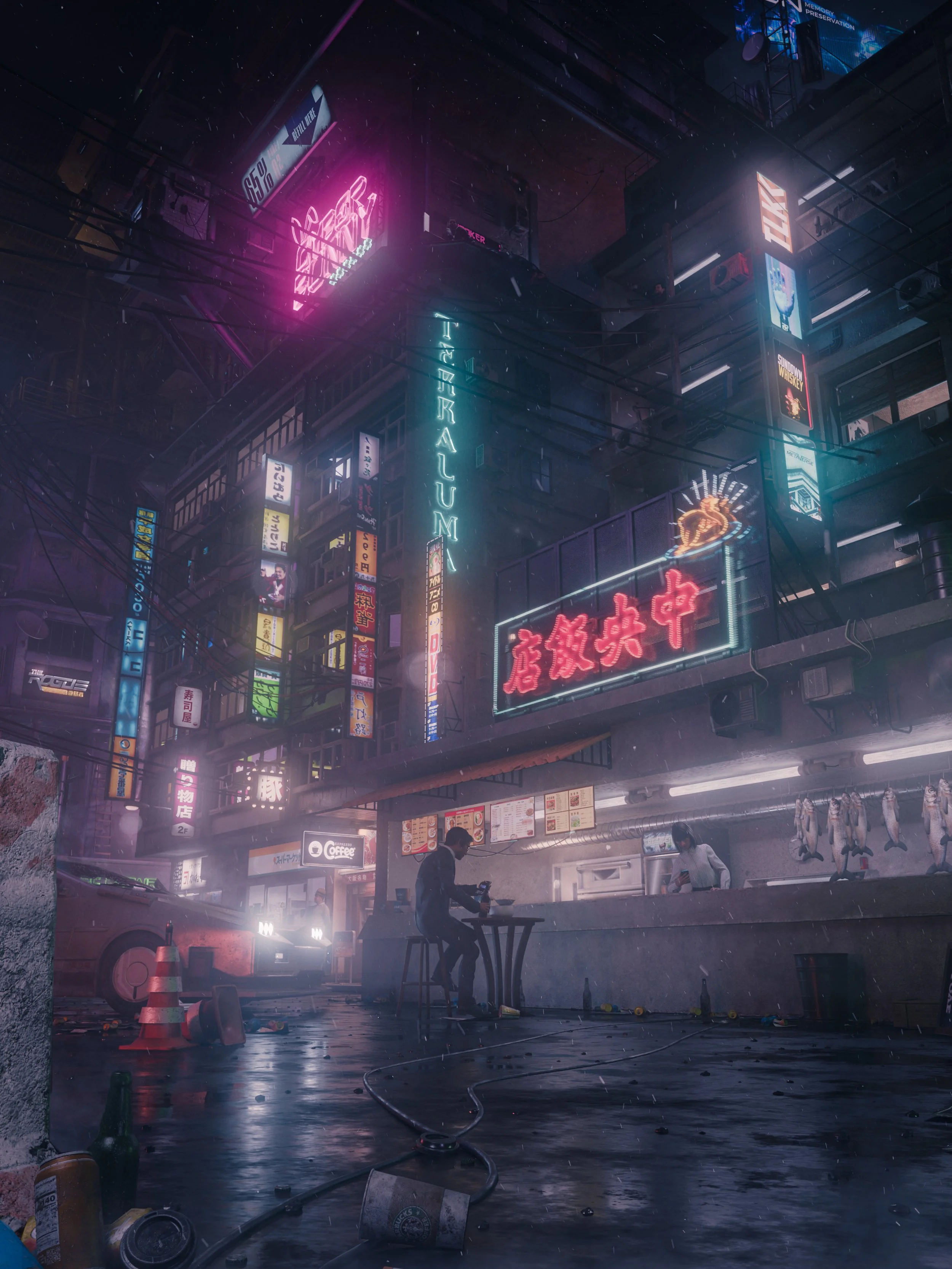
A rain-soaked neon street, within a dystopian cityscape.
Overview
Omoide is concept art created for a short YouTube film. The brief was to establish the look and mood of the world before production: a rain-soaked neon street at night, with a lone figure anchoring an otherwise chaotic city. I was asked for a near-future city grounded in reality, avoiding the clean megastructures of mainstream cyberpunk. Living in Japan at the time, I drew on real residential streets, overhead cabling and signage, and merged those details with a dystopian sci-fi aesthetic.
The intended tone is loneliness inside a crowded city: one person eating alone while the street around him hums with signage and traffic. Saturated magenta, cyan and red neon is set against near-black architecture, and the wet ground doubles every light source in reflection, filling the lower half of the frame with colour. Rain, scattered rubbish and worn surfaces keep the world lived-in and unglamorous.
Tools: Blender, Daz 3D, Substance 3D Painter, Photoshop
Timeframe: 27 days
Output: 3000 × 4000, PSD and PNG format.
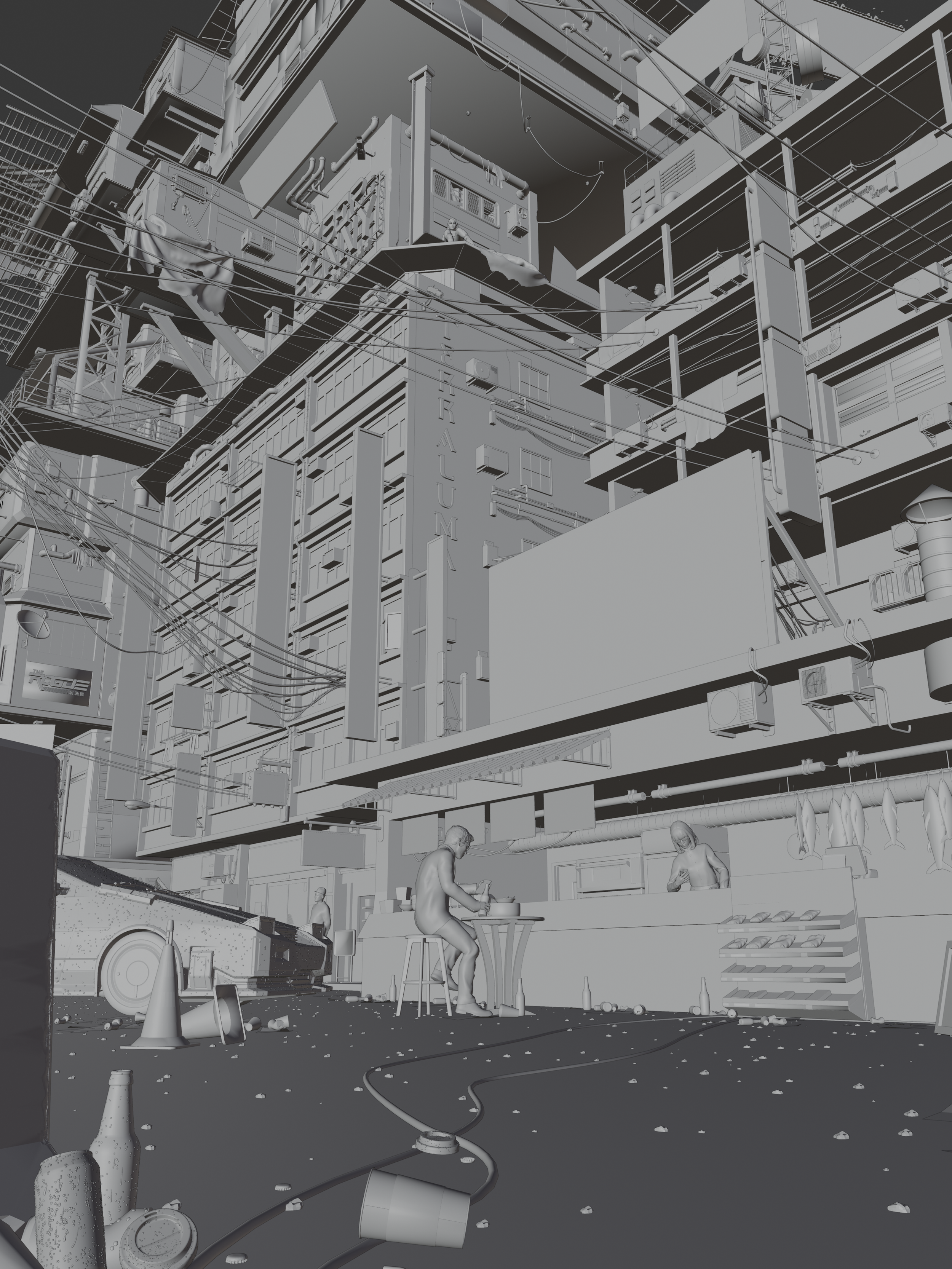
Scene stats: 14M triangles · 34,000 objects · 11 GB source textures · 1600 unique files.
Technical Details
Environment Creation
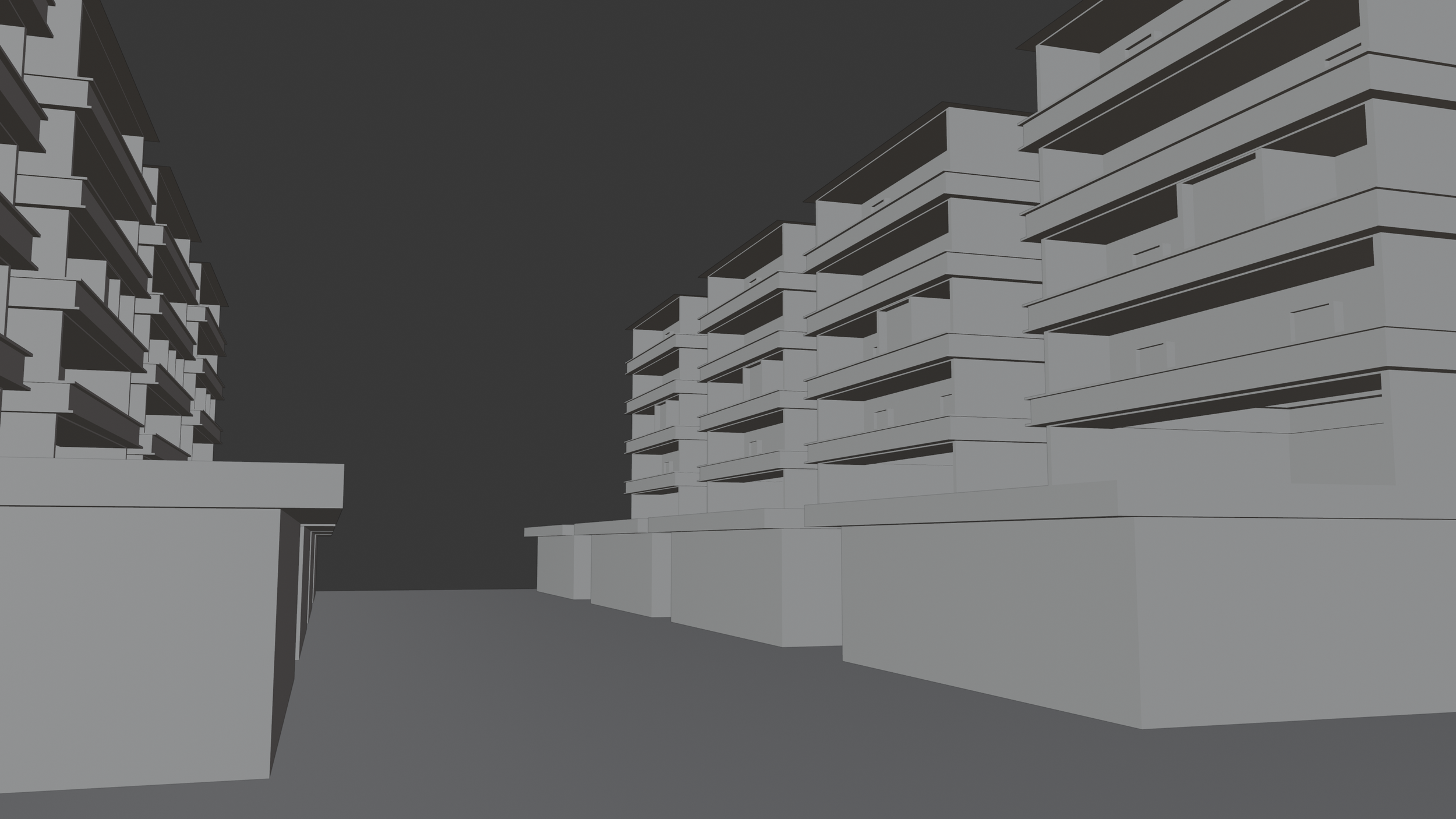
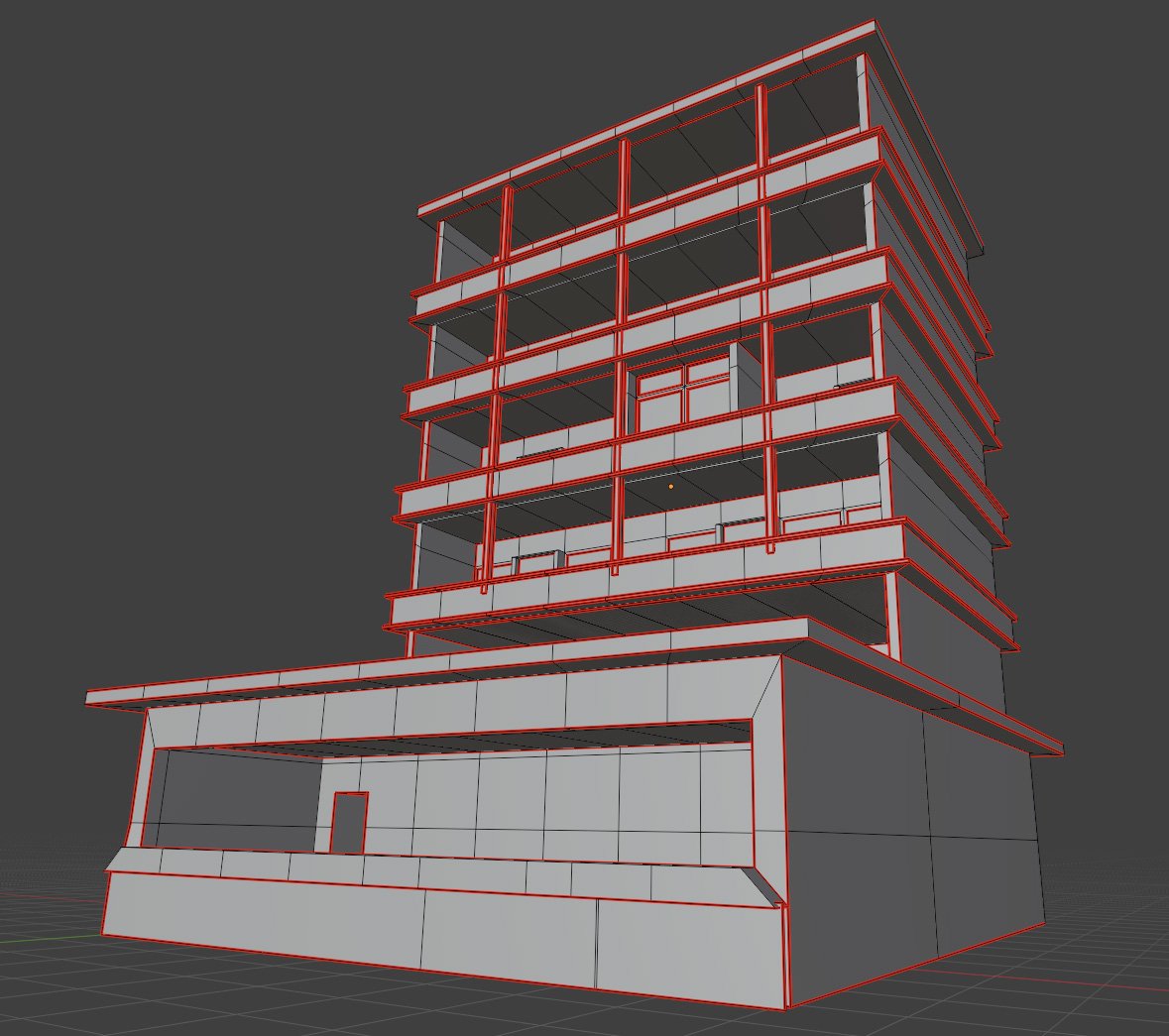
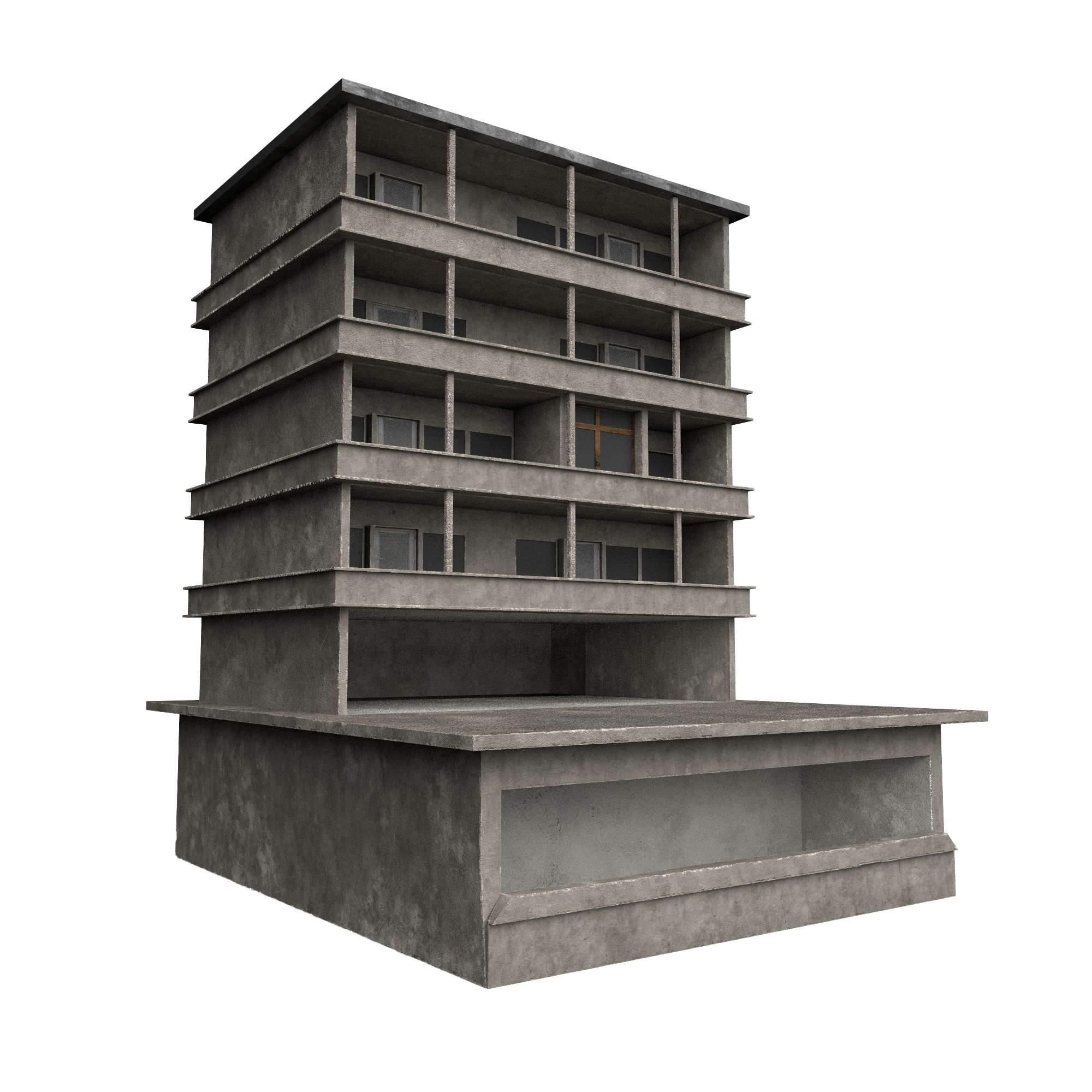
A geometry nodes setup distributes a low-poly rain droplet model across the surfaces of objects. The scene began as a blockout of six low-poly versions of the building model shown below, arranged as a street. As it came together, I added layers of objects for depth: the car, trash close to the camera and the distant billboard in the upper right. Separate models were made for hero and non-hero trash. The low-poly assets were scattered with a weight-paint-driven geometry nodes setup, while the hero assets were hand placed close to the camera. The Procedural Alleys add-on let me generate detailed buildings quickly for the structures next to the main building, and a set of modular buildings let me adapt the base structures the add-on created.
Modelling Assets
Detail is budgeted by distance from camera. The hero structures use UDIM tiles, around 12 per building at 4K, to hold signage and facade detail at full output resolution, while distant buildings were decimated by up to 80%. Much of the geometry was adapted from earlier projects, and camera frustum culling removed anything outside the frame before rendering, keeping the scene responsive in the viewport and within GPU memory.
Texturing Assets
With library and custom assets sharing the frame, every material was brought to a single grime and wear standard so imported pieces sit alongside the custom work. Hero assets were textured in Substance 3D Painter, while secondary props occupying only a few pixels were shaded procedurally in Blender. Signage uses emissive materials driven by image textures created from Midjourney AI and refined in Photoshop.
Animation
The scene was built for motion as well as stills. Both hero characters were rigged with Auto-Rig Pro and refined through manual weight painting; one, originally built in Daz 3D, was posed there before export. Secondary motion avoids simulation entirely: hair and loose cloth are driven by a displacement modifier fed by an animated cloud texture, giving controllable wind movement with no bake time. Hanging cloth and overhead wires use the Simple Wind add-on, where weight-painted vertex groups set how strongly each region responds. Background pedestrians come from the Procedural Crowds add-on, adding movement at distance without individual animation.