
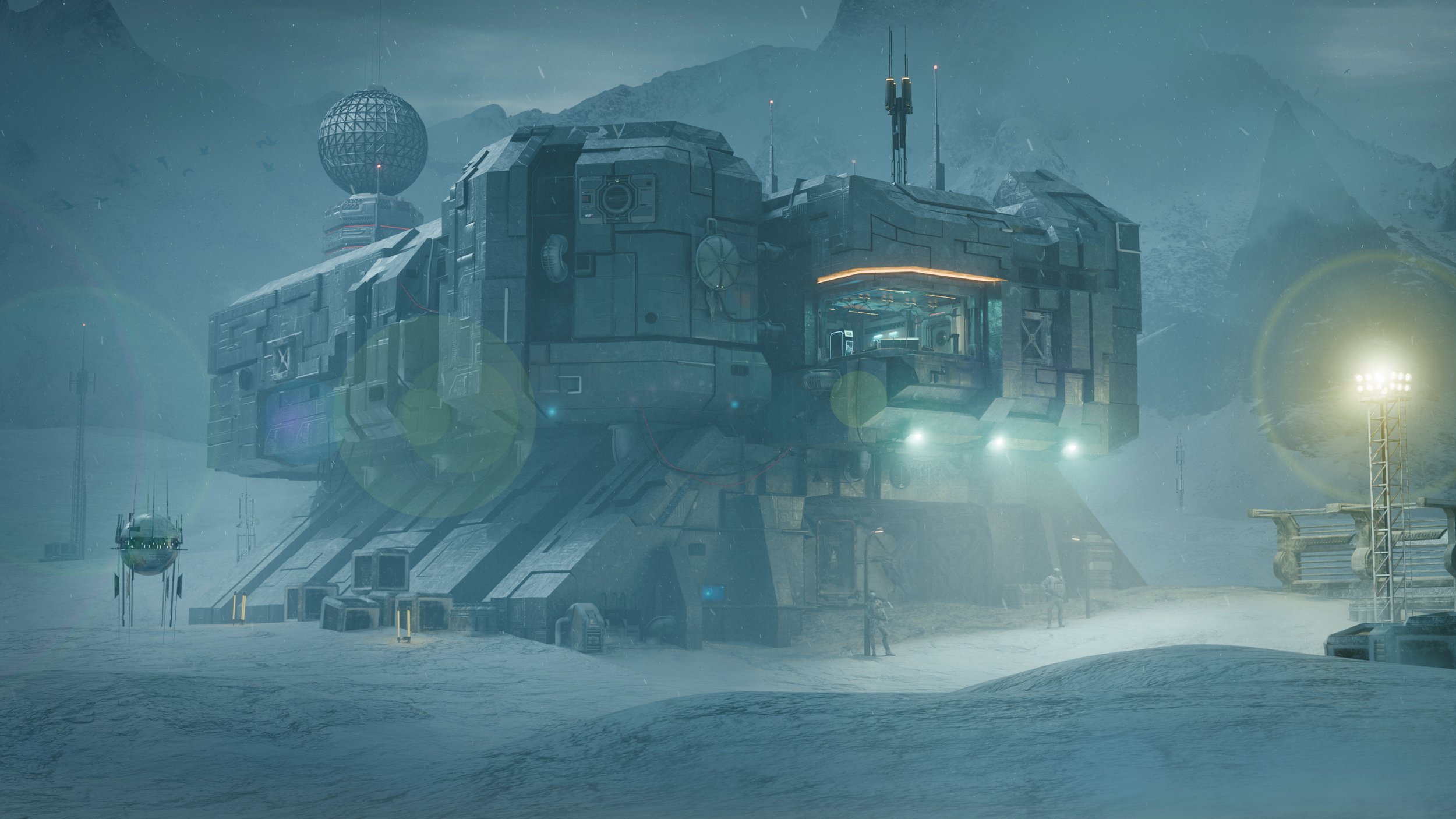
Outpost Zero
Cinematic hard-surface sci-fi environment, created as key art for a tabletop role-playing world.
Overview
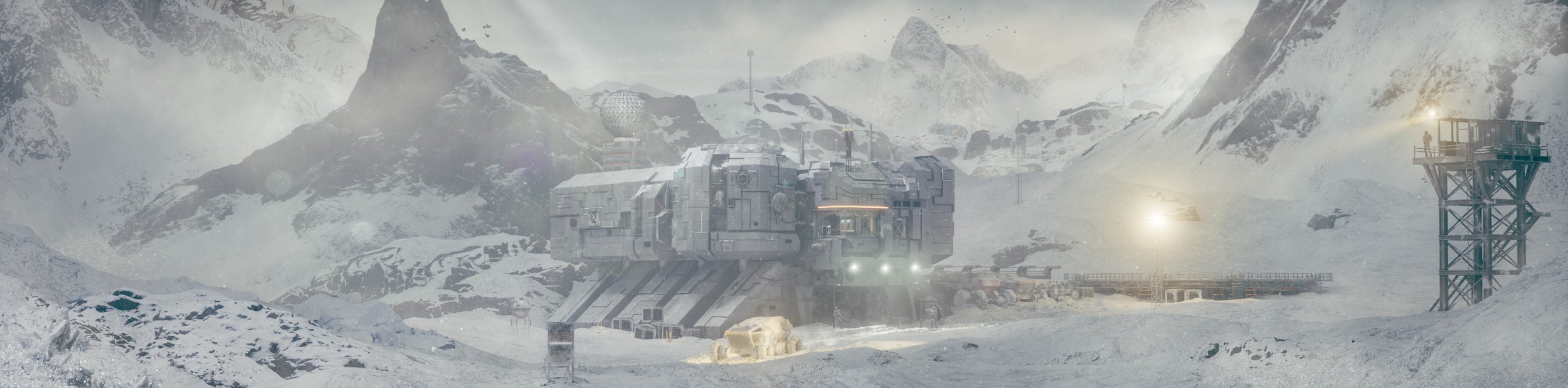
A cinematic key illustration for a private client's tabletop role-playing setting, establishing the location their campaign opens on: a weathered research outpost in a frozen mountain valley, the most remote station in the game's world, framed to read as a still from a feature film.
Tools: Blender, Daz 3D, Substance 3D Painter, Substance 3D Sampler, Photoshop
Timeframe: 22 days
Output: 3840 × 2160, PSD and PNG format.
Scene stats: 7M triangles · 265 objects · 2 GB source textures · 564 unique files.
Scope and Design Direction
The outpost is designed as working infrastructure rather than a backdrop. Its armoured body is raised on angled supports, with access ramps and antenna arrays positioned where a crew would need them. A low camera and human-scale references, the guards and a drone, establish the structure's size at a glance.
Mood and Visual Style
The client asked for a frame that could have been lifted from a feature film: cold, isolated and quietly menacing, a station that is clearly occupied yet offers no welcome. The palette is held to a desaturated blue-grey, with warmth isolated to only a few practical sources, an orange control-room window, amber markers and the floodlights, so any sign of life stands out against the storm.
Technical Details
Environment Creation
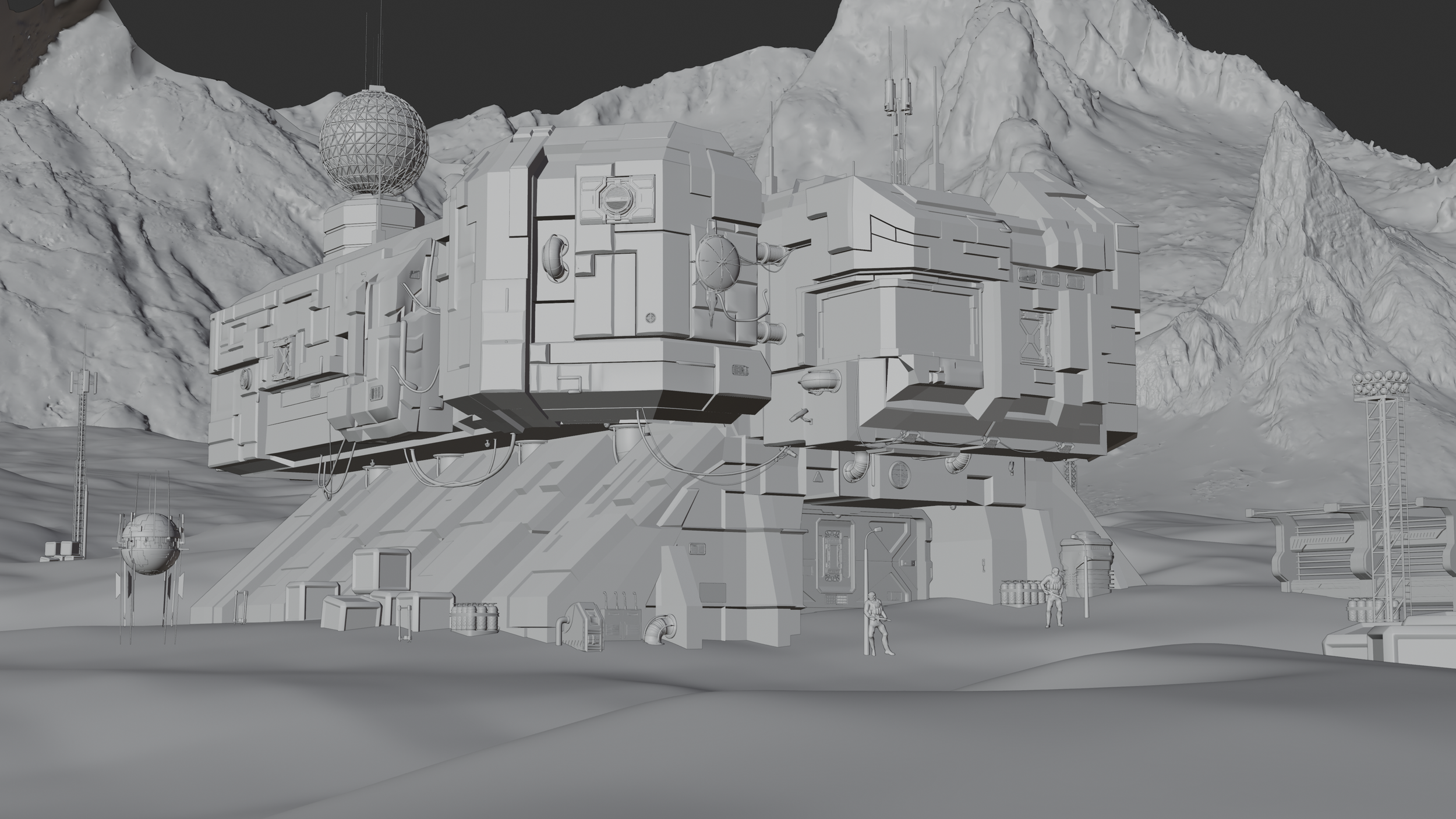
The camera sits close to the ground, placing the horizon below the base of the outpost so the structure towers over the guards. Lighting was tested in black and white to make sure the image worked in three clear levels of brightness: a dark hull, mid-grey snow and a few bright lights. Volumetric fog was reserved for the areas around the outpost's lights, where scattering through the haze forms the glow and light shafts that couldn't convincingly be faked. The wider atmosphere, separating the mountain ranges by distance, was built from layered fog cards in Photoshop, giving direct control over depth without the render cost of a full-scene volume. Falling snow, lens flares and film grain were added to increase realism to the scene output.
Modelling Assets
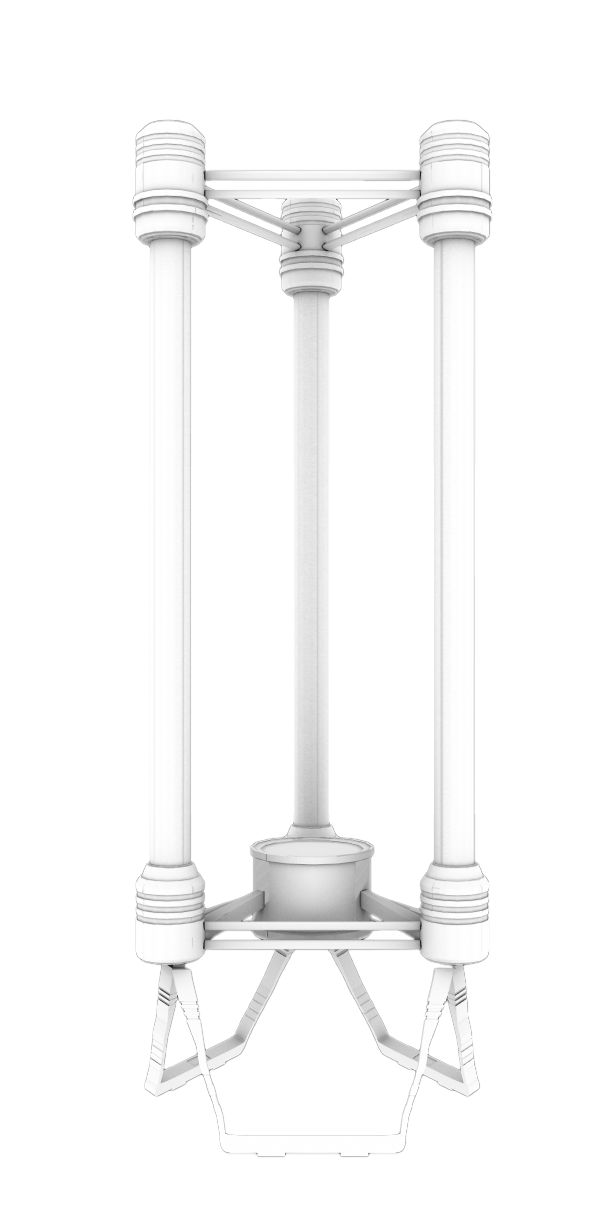
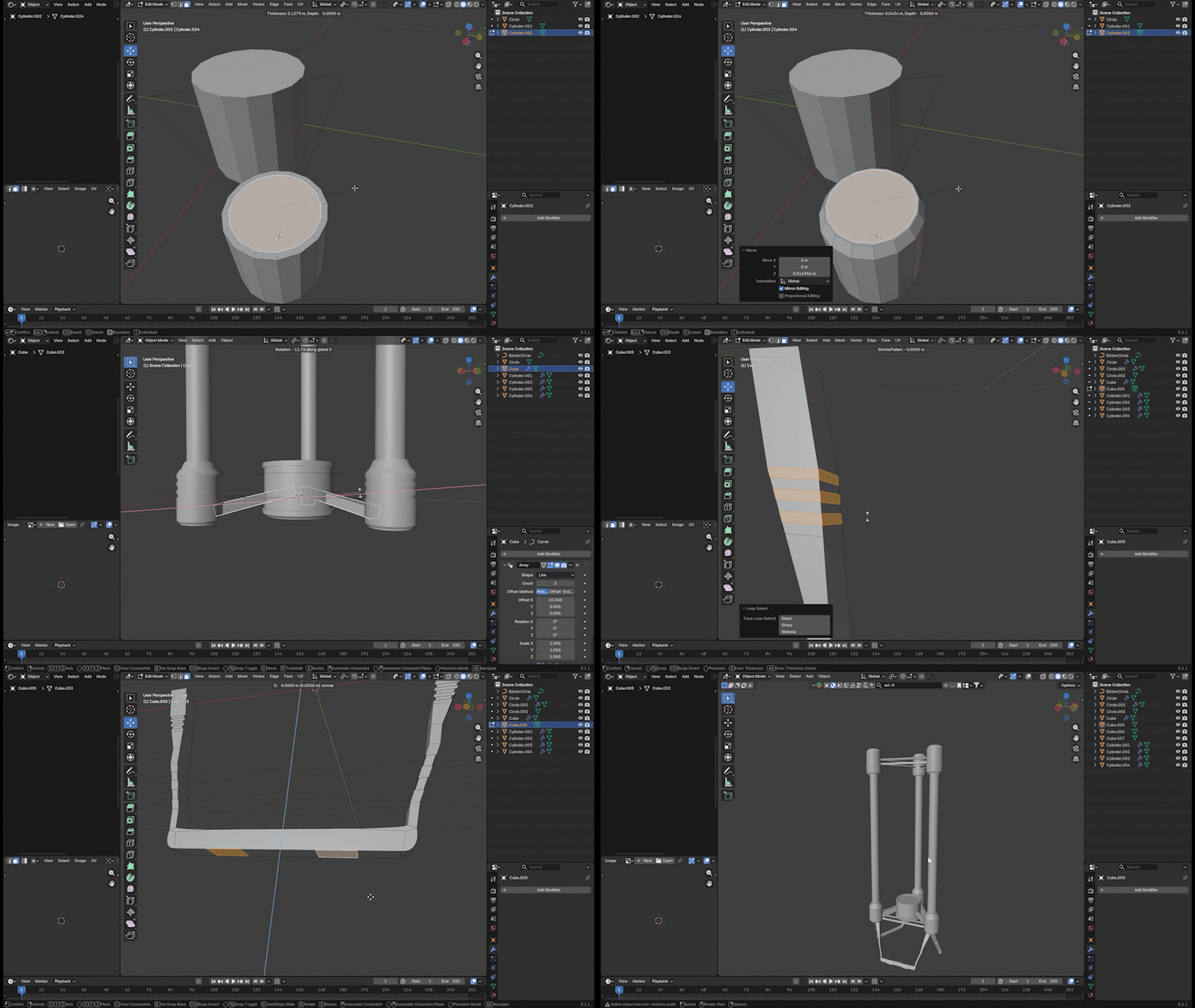
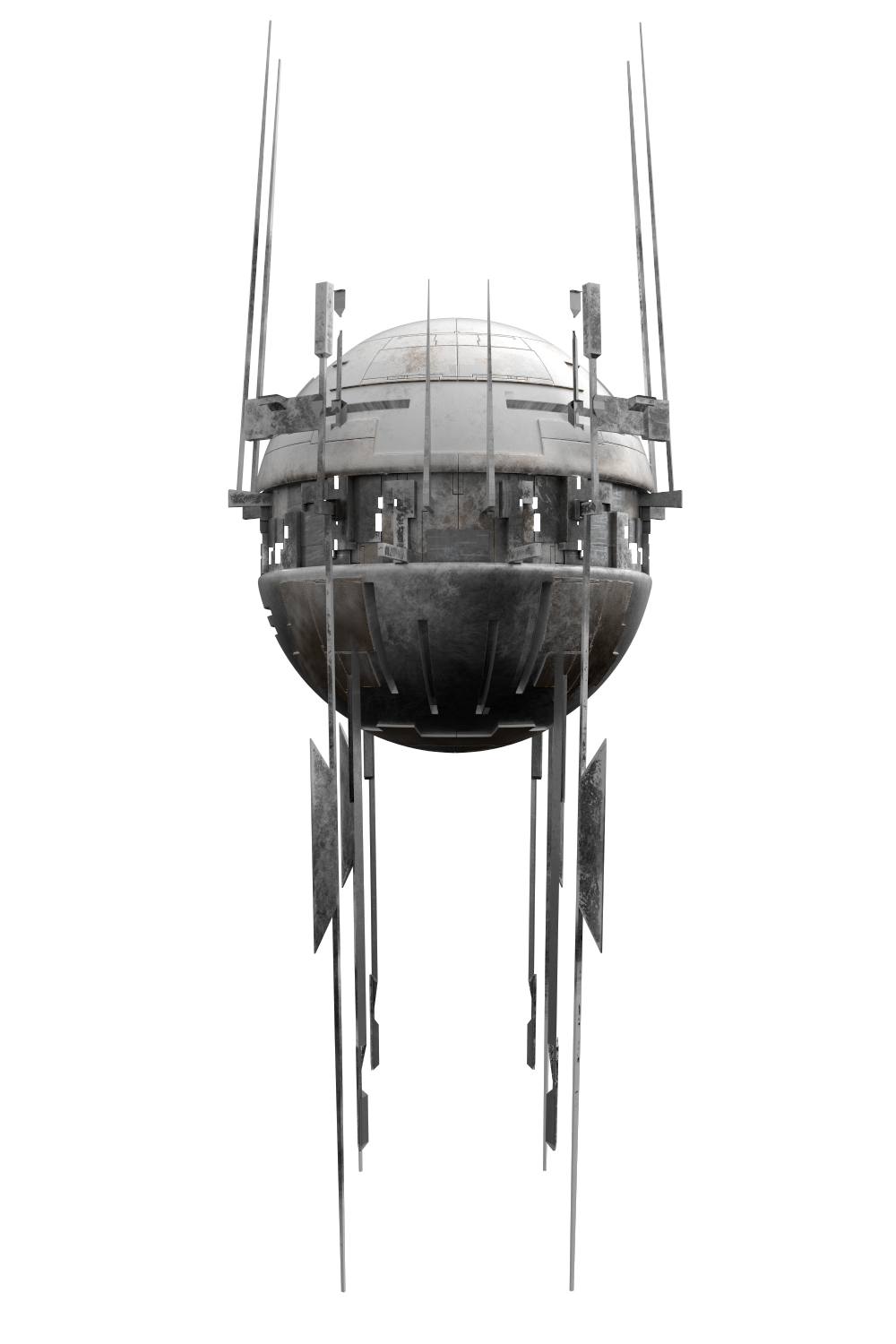
The structure takes its design cues from the harvesters in Dune, translating heavy industrial machinery into a fixed, occupied base. It was built in Blender across 265 separate objects, with the hull, supports and surrounding machinery kept as individual components so each could be repositioned and rebalanced against the camera as the composition developed. Most assets are medium-poly meshes, carrying enough geometry to hold clean silhouettes and edge highlights at 4K while keeping a 7M-triangle scene workable in the viewport. The guards were created in Daz 3D.
Texturing Assets
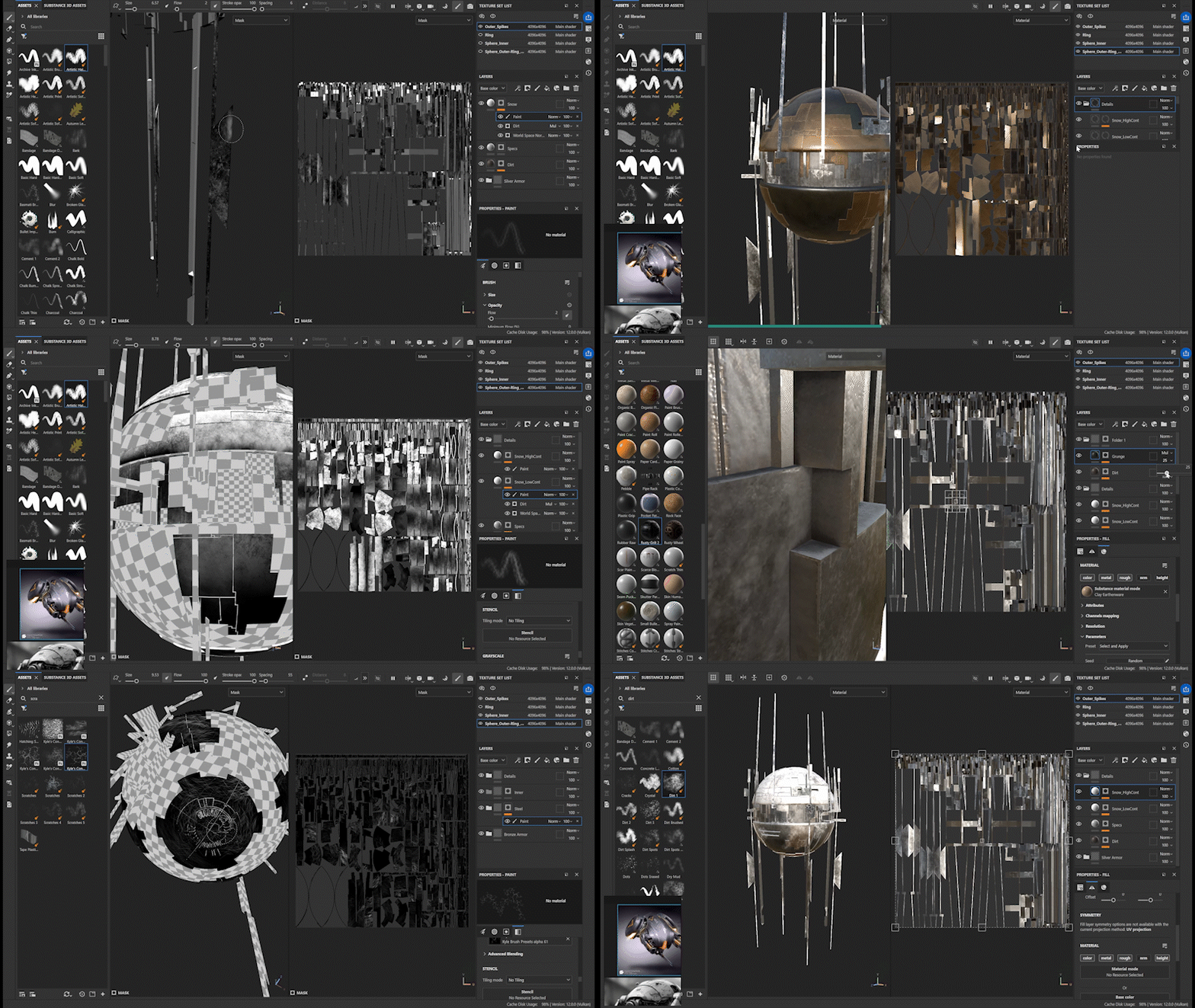
With custom models and library assets sharing the same frame, the main challenge was cohesion: every piece had to read as part of one weathered structure. Each asset was textured individually in Substance 3D Painter, and library assets were re-textured to match the custom work. Snow was built as a dedicated layer on every asset, masked using the baked world-space position map so coverage follows the same vertical gradient on each object regardless of how it was unwrapped, then combined with dirt layers and hand painting to break up the procedural result. Sci-fi panel materials were generated in Substance 3D Sampler from Midjourney source images, giving dense surface variation far faster than authoring each material by hand.
Personal project developed from Outpost Zero’s base, multiple months later.